


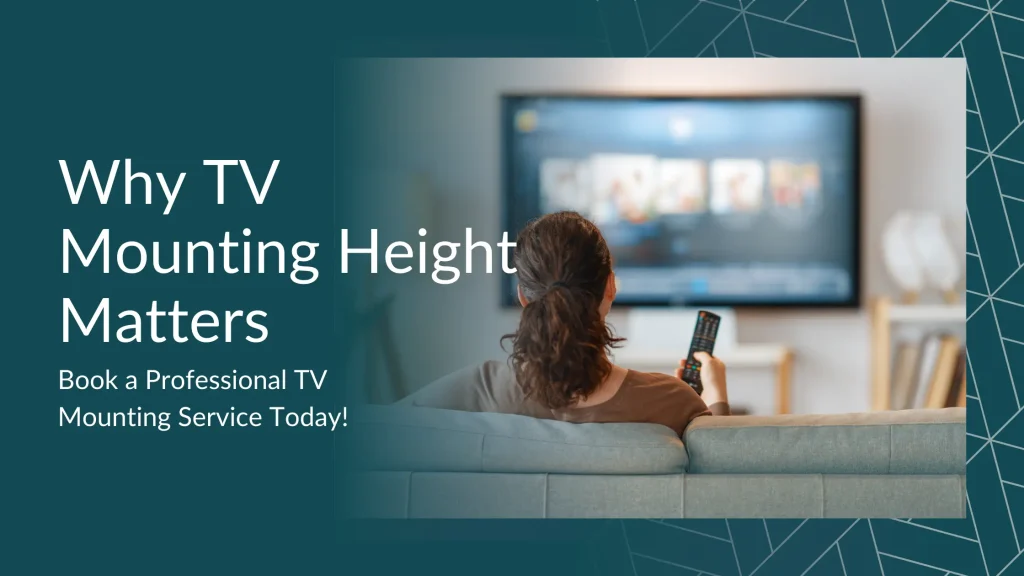

Mounting a TV isn’t just about finding a blank wall and hammering in some screws. The height of your TV can completely change your viewing experience. Mount it too high, and your neck starts aching after a few minutes of watching. Mount it too low, and you end up squinting at the screen from across the room.For those who want a hassle-free, professional solution, experts that How High Should a TV Be Mounted, TV Mounting Height, Ideal TV Mounting Height ensure your TV is mounted at the perfect height for your room, eye level, and furniture setup..
Why TV Mounting Height Matters
The height of your TV affects both comfort and performance. Watching a screen that’s mounted too high or low can cause neck strain, eye fatigue, and poor viewing angles. Proper mounting height ensures a natural line of sight that lets you enjoy movies, sports, and gaming without discomfort. Incorrect TV height can also reduce picture quality. Many TVs have optimal viewing angles, and mounting outside these ranges can distort colors, reduce brightness, and cause glare. Investing a little time upfront in determining the proper mounting height pays off with years of comfortable viewing.
What Is the Ideal TV Mounting Height?
The general rule of thumb is to align the center of the TV screen with the viewer’s seated eye level. Most people’s eyes are about 42 inches from the floor while seated on a couch, so the TV center should ideally be around this height. Of course, this varies depending on your furniture, room layout, and personal preferences..
TV Mounting Height by TV Size
How High to Mount a 55-Inch TV
For a 55-inch TV, the center of the screen should sit roughly 42 inches from the floor. This height accommodates average eye level and allows comfortable viewing from most seating positions.
How High to Mount a 65-Inch TV
A 65-inch TV has a larger display area, so the center might need to be slightly higher, around 44 to 45 inches, to maintain a balanced viewing angle.
How High to Mount a 75-Inch TV
For a 75-inch TV, aim for the screen center to be between 45 and 47 inches. Larger TVs naturally extend higher, so precise placement is crucial to avoid neck strain.
How High to Mount an 85-Inch TV
An 85-inch TV is massive, so proper height is essential. The center of the screen should typically be around 46 to 48 inches, with attention to seating distance and angle to prevent discomfort.
TV Mounting Height by Room Type
TV Mounting Height in the Living Room
Living rooms usually have multiple seating positions, so mounting height must consider all sightlines. The center of the TV should generally be at seated eye level, but slight tilts or adjustable mounts can help optimize viewing from different angles.
TV Mounting Height in the Bedroom
In bedrooms, TVs are often viewed while lying down. Mounting slightly higher than eye level allows for comfortable viewing from your bed. Tilting mounts can make this setup perfect for long binge-watching sessions.
TV Mounting Height Over a Fireplace
Mounting above a fireplace is tricky because it often raises the TV above eye level. In these cases, tilt or full-motion mounts are recommended, allowing the screen to angle downward toward viewers, reducing neck strain and glare.
Factors That Affect the Perfect TV Mounting Height
Seated Eye Level and Viewing Comfort
Your seated eye level is the primary factor for determining height. The center of your TV should align with your eyes when seated, usually around 40 to 45 inches from the floor.
Viewing Distance and Room Size
The distance from your seating area to the TV influences height. Larger rooms or farther seating may require slightly higher placement to maintain a natural line of sight and immersive experience.
TV Size and Screen Dimensions
Bigger TVs extend higher and lower, so you need to adjust the mounting height based on the screen’s height to ensure the center aligns with eye level.
Furniture and Console Height
Consider the height of your TV stand, media console, or sofa. Mounting too high above furniture can make the TV look awkward and create uncomfortable viewing angles.
Mount Type (Fixed, Tilting, Full-Motion)
Your mount type impacts optimal height. Fixed mounts require precise measurements, while tilting or full-motion mounts allow adjustments, making placement slightly more flexible.
Common TV Mounting Mistakes Homeowners Make
Many homeowners make the mistake of mounting a TV too high, ignoring eye level, or failing to account for glare. Others mount the TV without considering furniture or room layout, leading to awkward angles and reduced picture quality. Using an incorrect mount type for the room setup can also create problems. Professional TV mounting services prevent these mistakes, ensuring a safe and enjoyable viewing experience.
Why Hire a Professional TV Mounting Service?
Hiring experts ensures accurate measurements, safe installation, and optimal placement. Professional technicians handle cable management, wall reinforcement, and precise leveling. They also prevent potential damage to walls or TV units, which is common in DIY installations.
Our TV Mounting Process
Professional services start with a consultation, assessing room layout, furniture placement, and TV size. Technicians measure eye level, determine the ideal height, and recommend mount types. During installation, they secure the wall mount, manage cables, level the TV, and test for stability. Some services even include a 30-day warranty, ensuring your TV remains safely installed for years.
Book a Professional TV Mounting Service Today!
Ready to upgrade your viewing experience? Booking a professional TV mounting service ensures your TV is at the perfect height, mounted safely, and ready for optimal enjoyment. Services like How High Should a TV Be Mounted, TV Mounting Height, Ideal TV Mounting Height make scheduling easy, offer upfront pricing, and guarantee expert results.
FAQs About TV Mounting
Does TV size affect mounting height?
Yes, larger TVs require careful consideration of screen height to ensure the center aligns with eye level and provides a comfortable viewing angle.
Should mounting height differ by room?
Absolutely. Living rooms, bedrooms, and spaces with fireplaces all require different heights to optimize comfort and line of sight.
What type of TV mount should I use?
Your choice between fixed, tilting, or full-motion mounts depends on room layout, height, and desired flexibility in adjusting angles.
Is mounting a TV above a fireplace safe?
Yes, with the right mount type and tilt adjustments. Professionals ensure the screen is angled correctly and secured safely.
