


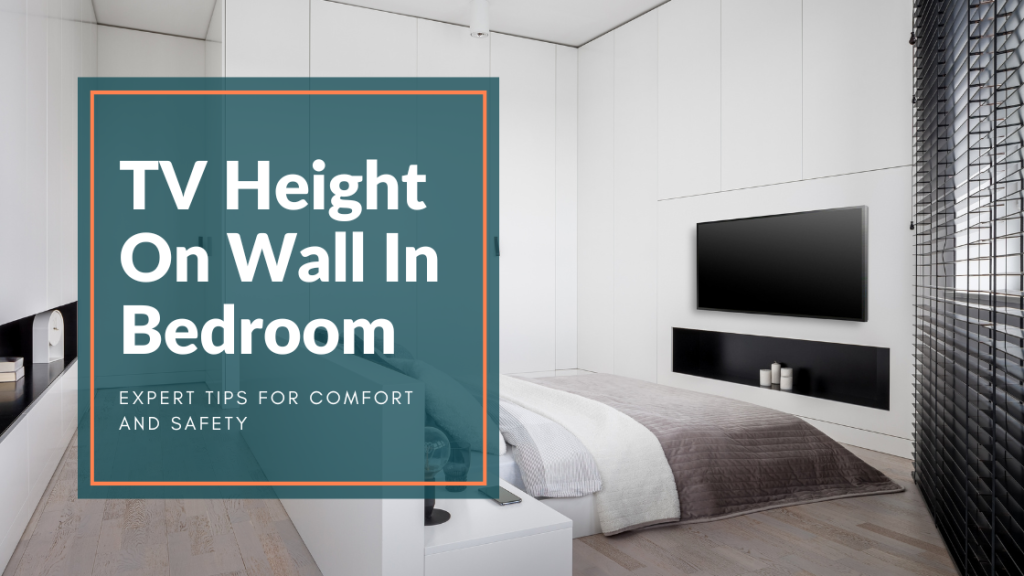

Mounting a TV in the bedroom feels like a small upgrade that makes a big difference. You get to relax, unwind, and watch your favorite shows without leaving the comfort of your bed. But there is one detail that trips up a lot of people and that is placement. Getting the height wrong can lead to neck strain, awkward viewing angles, or even safety issues. Understanding the right tv height on wall in bedroom helps turn your bedroom TV into a comfort feature instead of a daily annoyance.
Why TV Height Matters More Than You Think
In a living room, people usually sit upright on a couch. In a bedroom, most people are lying back or sitting against pillows. That changes everything. If the TV is mounted too high, you end up tilting your head forward for long periods. Too low and you might strain your eyes or block part of the screen with bedding or furniture.
Comfort should always come first. Your bedroom is meant to be a place to rest, not a place where your body feels tense after watching TV for twenty minutes.
The Most Common Bedroom TV Mistake
The biggest mistake people make is mounting the TV at the same height they would use in a living room. Bedrooms work differently. When you are lying down, your line of sight is angled upward slightly. That means the TV usually needs to be lower than people expect.
Many homeowners search for how high to hang tv in bedroom and get overwhelmed by conflicting advice. The truth is there is no one perfect number that works for every room. The right height depends on your bed height, mattress thickness, and how you usually watch TV.
Start With Your Viewing Position
Before grabbing a drill, take a moment to sit or lie in bed the way you normally would while watching TV. Stack your pillows the way you like them. Look straight ahead in a relaxed position. Wherever your eyes naturally land on the wall is a good reference point.
Ideally, the center of the TV screen should line up close to that eye level. It does not need to be exact, but the closer it is, the more comfortable it will feel over time.
Bed Height Makes a Big Difference
Beds are not all the same height. Some sit low to the floor while others are tall with thick mattresses and box springs. A taller bed means your eye level is higher when you are lying back. That usually allows the TV to be mounted slightly higher.
This is why advice about bedroom height tv often feels confusing. Two people with different beds could follow the same guide and still end up with very different results. Always measure from your own bed instead of copying someone else’s setup.
Wall Mount Angle Matters Too
If you are mounting the TV flat against the wall, height becomes even more important. If you plan to use a tilting mount, you have a bit more flexibility. A slight downward tilt can reduce glare and help align the screen with your viewing angle.
That said, tilting too much is not ideal either. It can distort the picture and put extra stress on the mount over time. Height should still do most of the work, with tilt used only as a small adjustment.
Safety Should Never Be an Afterthought
Comfort is important, but safety matters just as much. A TV mounted too high may require heavy brackets and longer bolts. If not installed properly, that can be risky. Bedroom walls often have fewer studs in ideal positions, especially above beds.
Always make sure the mount is secured into studs or approved anchors. A TV falling above a bed is not just inconvenient, it is dangerous. If you are unsure about the wall structure, professional help is worth considering.
Distance From the Bed
Height and distance work together. A larger TV mounted close to the bed may need to be lower than a smaller TV mounted farther away. If the screen feels overwhelming or forces you to move your eyes too much, something is off.
A good rule is that your eyes should not have to travel far up or down to follow the action on screen. Watching TV should feel natural, not like a workout for your neck.
What About Bedrooms With Dressers
Some bedrooms have dressers or cabinets below the TV. In that case, the furniture often determines the lowest possible mounting height. Make sure there is enough clearance so the TV does not feel cramped or blocked.
If the dresser is tall, you may need to mount the TV slightly higher than ideal. In that situation, a tilting mount becomes more useful to bring the screen angle back toward your eyes.
Watching Habits Matter
Think about how you actually use the TV. Do you watch while lying flat, sitting upright, or somewhere in between. Do you watch for long periods or just before sleep. Your habits should guide your decision.
Someone who watches a lot of late night shows while lying back will want a different setup than someone who sits upright and watches for short periods.
Taking Your Time Pays Off
One of the best tips is not to rush. Before drilling holes, tape a paper outline of your TV on the wall and test different heights. Sit or lie in bed and see what feels best. This simple step can save you from regret later.
Once the TV is mounted, changing the height means patching holes and starting over. A little patience upfront makes a big difference.
When to Get Help
If measuring, mounting, and drilling feel stressful, there is nothing wrong with calling a professional. Proper installation ensures the TV is secure, level, and positioned correctly for comfort.
Professionals also know how to hide wires cleanly, which keeps the bedroom looking calm and uncluttered. That visual peace is part of what makes a bedroom relaxing.
