
Adding a fire pit to your gazebo can make your outdoor space more comfortable. However, placing an open flame beneath a roof creates potential fire and ventilation risks. Before setting one up, you need to understand which fire pits are suitable and what safety precautions to follow.
Related Articles:
Can You Put a Fire Pit Under a Gazebo?
Yes, but only if the fire pit is specifically approved for use beneath an overhead structure. You must also meet its clearance requirements and ensure adequate ventilation. If the manufacturer prohibits covered use, keep the fire pit outside the gazebo.
Not every fire pit works in the same environment. Wood-burning models produce sparks and flying embers, while gas models still generate significant heat. Choosing the right equipment is only one part of creating a safe outdoor setup.
Is It Safe to Use a Fire Pit Under a Gazebo?
Using a fire pit under a gazebo can expose the structure to excessive heat, smoke, and potential ignition. The risks depend on the fire pit, roof construction, and surrounding materials. Understanding these hazards helps you make a safer decision.
Fire and Heat Damage
Fire pits release heat that can travel toward the gazebo roof. Continuous exposure may damage roofing materials or weaken nearby components. Fabric can melt, while wooden structures can become vulnerable to ignition.
Metal roofs are not automatically safe either. Although metal does not burn like wood, it can become extremely hot or suffer heat damage. Nearby wooden supports and decorations may also catch fire.
Smoke and Carbon Monoxide Buildup
Smoke can collect beneath a gazebo roof instead of dispersing freely. This may cause eye irritation and breathing discomfort. Combustion appliances can also produce carbon monoxide, a dangerous gas that cannot be seen or smelled.
Open sides can improve airflow, but they do not guarantee safe operation. Wind direction and the gazebo’s layout can affect how smoke moves. Never operate a fire pit in an enclosed or poorly ventilated area.
Smoke Accumulation Issues
Smoke accumulation is a major safety concern when using a fire pit under a gazebo. Poor ventilation can cause smoke to collect beneath the roof instead of dispersing into the open air. This may lead to eye irritation, breathing difficulties, and reduced visibility.
The risk becomes more serious when combustion gases, including carbon monoxide, build up in enclosed spaces. Open sides do not always provide sufficient airflow to keep the area safe. If smoke cannot disperse properly, avoid operating the fire pit under the gazebo.
Risk of Sparks and Embers
Wood-burning fire pits produce sparks and flying embers that can create fire hazards beneath a gazebo. These hot particles may land on combustible materials, including fabric canopies, wooden beams, and outdoor furniture. Even a small ember can ignite nearby materials under the right conditions.
The risk increases during windy conditions or when wood burns intensely. Spark screens can reduce flying embers but cannot eliminate the danger completely. Keep wood-burning fire pits away from overhead structures and other combustible surfaces.
Which Types of Fire Pits Can You Use Under a Gazebo?
The fuel source makes a significant difference when choosing a fire pit. Some models produce sparks and heavy smoke, while others offer more controlled flames. However, no fuel type automatically makes a fire pit safe beneath a gazebo.
Wood-Burning Fire Pits
Wood-burning fire pits are generally unsuitable beneath gazebos. Burning wood releases sparks, embers, and smoke that can reach nearby structures. These hazards become more concerning when a roof sits directly above the flames.
Even a protective spark screen cannot eliminate every risk. Strong winds may carry hot embers toward the roof or surrounding furniture. The safer option is to use a wood-burning fire pit in an open outdoor area away from overhead structures.
Propane Fire Pits
Propane fire pits offer more control over flame intensity. They do not produce flying wood embers, making them different from traditional wood-burning models. However, their flames still release heat and combustion gases.
Some propane models are approved for specific covered installations. Others must only operate in open outdoor spaces. Always check the manufacturer’s instructions before placing one beneath a gazebo.
Natural Gas Fire Pits
Natural gas fire pits use a connected gas supply instead of a portable propane tank. They provide consistent fuel delivery and adjustable flames. However, they still require proper ventilation and overhead clearance.
Check whether the appliance is approved for covered outdoor use. Gas connections should also follow applicable installation requirements. A qualified professional should handle gas line work.
Smokeless Fire Pits
Smokeless fire pits reduce visible smoke through improved combustion. However, they still produce heat and may release sparks or embers. The term smokeless does not mean the appliance is safe beneath a roof.
Most wood-burning smokeless models still require open-air placement. Check the product manual for restrictions on overhead structures. If covered operation is prohibited, move the unit outside the gazebo.
Does Your Gazebo Material Affect Fire Pit Safety?
Yes, the gazebo’s construction affects how it responds to heat. Some materials can melt or ignite, while others may become hot or suffer structural damage. You should evaluate the entire structure before choosing a fire pit.
Fabric or Soft-Top Gazebos
Fabric gazebos are generally poor choices for fire pit placement. Their canopies may melt or catch fire when exposed to excessive heat. Curtains and mosquito netting can create additional hazards.
Keep wood-burning and unapproved gas fire pits away from these structures. Even a small flame can cause damage under the wrong conditions. Follow the gazebo manufacturer’s restrictions before introducing any heating appliance.
Wooden Gazebos
Wooden gazebos require extra attention because their structural components are combustible. Heat can affect roof beams, support posts, and decorative features. Flying embers may also ignite nearby surfaces.
A treated wood finish does not make the structure fireproof. You should avoid placing wood-burning fire pits beneath wooden roofs. Only consider other appliances when both manufacturers explicitly permit the setup.
Metal or Aluminum Hardtop Gazebos
Metal gazebos offer better resistance to direct ignition than fabric or untreated wood. However, their construction does not eliminate fire hazards. Heat can damage roof coatings, nearby components, and combustible furniture.
Check the materials beneath the roof panels as well. Some structures combine metal roofing with wooden support beams. The entire assembly must meet the appliance’s installation requirements.
Open-Sided Gazebos and Pergolas
Open-sided structures allow more air to circulate around a fire pit. This can help smoke disperse into the surrounding area. However, airflow alone does not make the installation safe.
A pergola may also have exposed wooden beams or other combustible components. Adjustable roof slats do not replace manufacturer-approved clearance. Check the structure and appliance specifications before using them together.
What Should You Check Before Using a Fire Pit Under a Gazebo?
Before using a fire pit under a gazebo, check whether the appliance and structure are suitable for covered use. Pay attention to clearance, ventilation, and nearby combustible materials. Use the following checklist to evaluate your setup.
Check the Fire Pit Manufacturer’s Instructions
Confirm whether your fire pit is approved for use under a gazebo or other overhead structure. Review the recommended clearance and installation restrictions. Never assume that a gas or smokeless fire pit is automatically safe for covered use.
Measure the Required Clearance
Check the vertical and horizontal clearance between the fire pit and surrounding structures. Make sure the roof, support posts, and nearby furniture meet the manufacturer’s requirements. Avoid using the appliance if the required clearance cannot be maintained.
Inspect the Gazebo Materials
Identify whether your gazebo has a fabric canopy, wooden roof, or metal construction. Check for combustible components and materials that may become damaged by excessive heat. Pay particular attention to roof panels, support beams, curtains, and decorations.
Ensure Proper Ventilation
Make sure smoke and combustion gases can disperse safely around the fire pit. Open-sided structures may improve airflow, but they do not guarantee adequate ventilation. Avoid using a fire pit in enclosed or poorly ventilated spaces.
Check the Ground Surface and Surrounding Area
Place the fire pit on a stable, noncombustible surface that meets the manufacturer’s requirements. Remove nearby furniture, dry leaves, and other flammable materials. Keep the recommended safety distance from surrounding objects.
Review Local Fire Safety Regulations
Check local fire codes and outdoor burning restrictions before operating a fire pit. Some areas may prohibit open flames near buildings or covered structures. Follow applicable regulations alongside the manufacturer’s safety instructions.
Best Fire Pit Options for Use Under a Gazebo
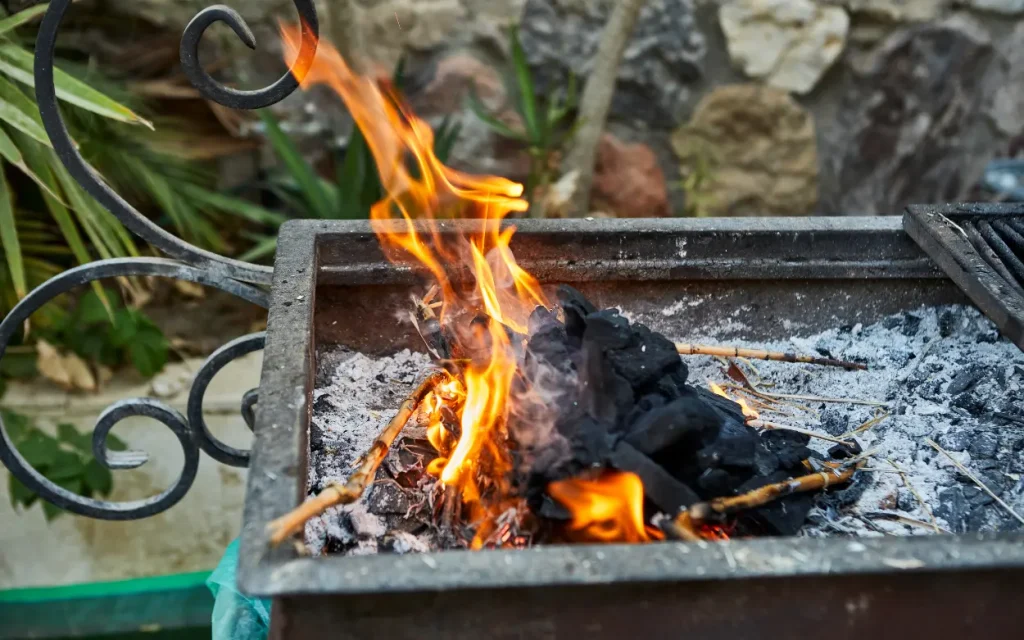
Not all fire pits are suitable for use under a covered structure. Choosing the right type is critical for safety.
Low-Profile Fire Pits
Low-profile fire pits are closer to the ground and produce more controlled flames. Because they are lower, heat is less likely to reach the gazebo roof directly. These are better suited for semi-open gazebos with high ventilation.
Fire Tables with Safety Features
Fire tables are one of the safest options. They are designed with controlled flame output and built-in safety mechanisms. Many models use propane, which burns cleaner than wood and produces less smoke and fewer sparks.
Fire Pits with Spark Screens
Spark screens act as a protective barrier that prevents embers from escaping. This significantly reduces fire risk under a gazebo. They are especially useful for wood-burning setups where sparks are more common.
How to Use a Fire Pit Safely in an Outdoor Space
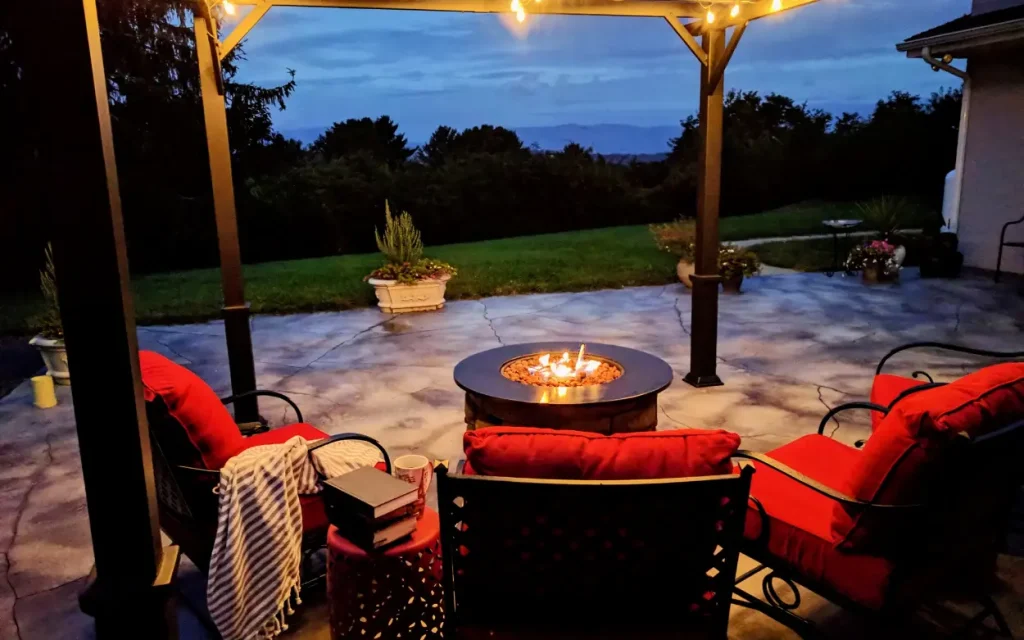
Using a fire pit safely requires proper placement, regular supervision, and appropriate fire prevention measures. Even when an appliance is approved for outdoor use, nearby structures and combustible materials can create hazards. Follow these fire pit safety practices to reduce potential risks.
Keep a Safe Distance From Combustible Materials
Position your fire pit away from wooden structures, fabric canopies, outdoor furniture, and dry vegetation. Maintain the clearance specified by the manufacturer. This helps reduce the risk of accidental ignition.
Keep a Fire Extinguisher Nearby
Have a suitable fire extinguisher or other appropriate firefighting equipment accessible whenever you use a fire pit. Make sure everyone knows where it is located. Follow the equipment instructions during an emergency.
Never Leave a Fire Pit Unattended
Always supervise an operating fire pit, especially when children or pets are nearby. Keep them away from the flames and hot surfaces. Turn off the appliance or fully extinguish the fire before leaving the area.
Avoid Using a Fire Pit During Strong Winds
Strong winds can carry sparks and embers toward nearby structures. They can also change the direction of heat and smoke. Avoid operating a fire pit when weather conditions make it difficult to control the flames.
Follow Proper Shutdown and Cooling Procedures
Turn off the fuel supply after using a gas fire pit. Allow the appliance to cool completely before cleaning, moving, or covering it. For wood-burning models, follow the manufacturer’s instructions for fully extinguishing and disposing of ashes.
What Are the Best Alternatives to a Fire Pit Under a Gazebo?
If your gazebo cannot accommodate a fire pit safely, you still have other ways to enjoy the space. Several heating options provide warmth without relying on an open flame. Choose equipment designed for your specific outdoor environment.
Electric Patio Heaters
Electric patio heaters provide warmth without burning wood or gas. Many models use radiant heat to warm people and nearby objects. However, they still require suitable electrical connections and manufacturer-approved clearances.
Choose an outdoor-rated model for exposed areas. Keep electrical connections protected from moisture. Follow the installation instructions to prevent overheating.
Infrared Outdoor Heaters
Infrared heaters provide directional warmth rather than heating all the surrounding air. They can be mounted on suitable walls or ceilings. However, mounting height and clearance requirements still apply.
Check whether the model is approved for your gazebo. Avoid placing the heater near curtains or other combustible materials. Professional installation may be necessary for certain models.
Move the Fire Pit Outside the Gazebo
Moving the fire pit to an open area is often the simplest alternative. This provides more space for heat and smoke to disperse. It also reduces exposure to overhead structures.
Place the appliance on a suitable noncombustible surface. Maintain the required distance from buildings, trees, and other combustible materials. Follow the fire pit manufacturer’s instructions and local regulations.
Conclusion
A gazebo can make your outdoor area more comfortable for relaxing and entertaining. However, adding a fire pit requires careful planning, proper placement, and attention to safety requirements. Always check your gazebo’s construction and follow the fire pit manufacturer’s instructions before use.
If you are planning to install a new gazebo, proper assembly is an important part of creating a stable outdoor space. FixTMan offers professional gazebo assembly services to help you set up your outdoor structure. Let our technicians handle the assembly so you can focus on enjoying your outdoor space.
Frequently Asked Questions
Can you use a propane fire pit under a gazebo?
Yes, propane fire pits are safer than wood-burning ones because they produce less smoke and fewer sparks, but ventilation is still required.
Is a smokeless fire pit safe under a gazebo?
Smokeless fire pits reduce smoke but still produce heat and carbon monoxide, so ventilation and clearance rules still apply.
Can you use a fire pit under a pergola?
It depends on the material and openness. Open pergolas are safer than enclosed gazebos, but precautions are still necessary.
How Much Clearance Does a Fire Pit Need Under a Gazebo?
The required clearance depends on the fire pit model, heat output, and gazebo construction. Always follow the manufacturer’s recommended vertical and horizontal clearance requirements. If the appliance is not approved for use under an overhead structure, do not operate it beneath a gazebo.
What Are the Best Alternatives to a Fire Pit Under a Gazebo?
If your gazebo cannot accommodate a fire pit safely, you still have other ways to enjoy the space. Several heating options provide warmth without relying on an open flame. Choose equipment designed for your specific outdoor environment.