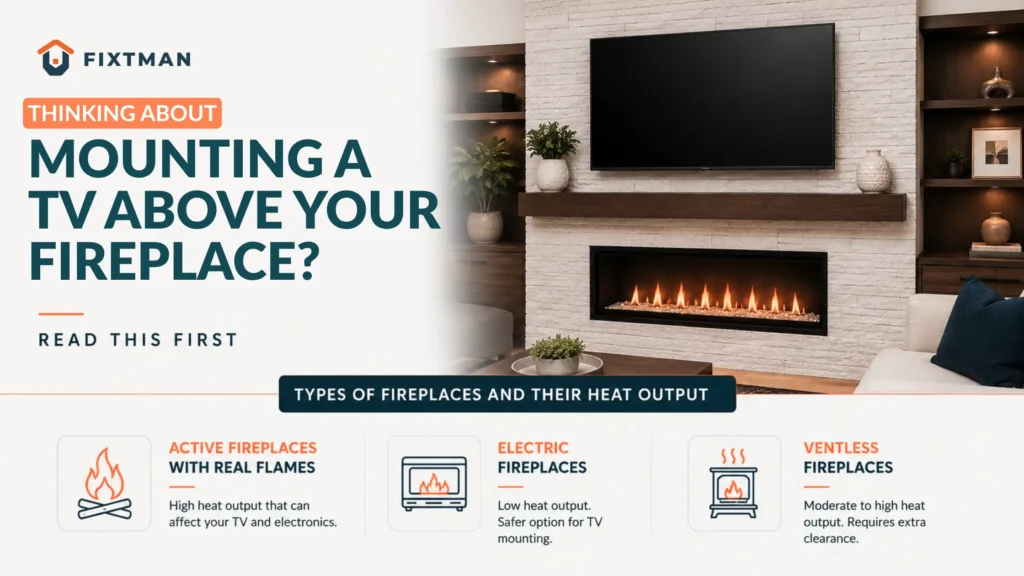

Yes, you can safely mount a TV above some fireplaces, but it depends on the fireplace type and heat output. Electric and decorative fireplaces are generally safer, while wood-burning and gas fireplaces can expose your TV to excessive heat and cause damage.
This guide explains how fireplace type, heat exposure, temperature, and proper installation affect the safety of mounting a TV above a fireplace.
READ ALSO: Guide to Mounting a TV on a Concrete Wall
Understanding the Core Safety Question
The primary concern about mounting a television above a fireplace centers on heat exposure. Televisions contain sensitive electronic components designed to operate within specific temperature ranges. Excessive heat damages these components and shortens your television’s lifespan considerably.
Many homeowners successfully mount televisions above fireplaces without problems. The key difference between safe and unsafe installations involves recognizing fireplace type, implementing heat management strategies, and choosing appropriate television models. Making informed decisions about your specific situation prevents costly damage and safety hazards.
Types of Fireplaces and Their Heat Output
Not all fireplaces generate the same amount of heat or pose identical risks to mounted televisions. Fireplace type is the primary factor determining whether TV mounting is safe in your home.
Active Fireplaces with Real Flames:
Traditional wood-burning fireplaces and gas fireplaces with real flames produce substantial heat. These active fireplace types create temperatures that can exceed 100-150 degrees Fahrenheit just above the fireplace opening. This intense heat rises continuously and directly impacts anything mounted directly above it.
Electric Fireplaces:
Electric fireplaces produce minimal actual heat despite creating realistic flame effects. They generate warmth through electric heating elements but at much lower temperatures than real flame fireplaces. Many electric fireplaces function primarily as decorative pieces with minimal heat output, making them relatively safe for TV mounting above them.
Decorative or Non-Functional Fireplaces:
Some homes contain decorative fireplaces that never actually operate. These non-functional installations generate zero heat and pose no thermal risk to mounted televisions. If your fireplace is purely decorative, TV mounting above it carries no heat-related safety concerns.
Ventless Fireplaces:
Ventless gas fireplaces are convenient but generate considerable heat. These units produce temperatures and heat patterns similar to traditional fireplaces, making them problematic for TV mounting unless proper heat management is implemented.
Temperature Effects on Television Components
Television manufacturers design their products to operate safely within specific temperature ranges. Understanding how heat affects TV components helps explain why fireplace mounting requires careful consideration.
Safe Operating Temperature Ranges:
Most televisions operate safely between 32°F and 104°F (0°C to 40°C). Exceeding these temperature ranges stresses internal components and accelerates degradation. Extended exposure to temperatures above 104°F causes permanent damage to LCD crystals, power supplies, and processor components.
How Heat Damages Television Components:
- LCD Panel Damage: Excessive heat causes liquid crystal degradation, resulting in discoloration, dead pixels, or complete panel failure
- Power Supply Failure: Heat stresses capacitors and other electrical components, reducing their lifespan dramatically
- Processor Malfunction: Chips and processors designed for specific temperatures malfunction or fail completely when overheated
- Internal Connections: Solder joints connecting components become brittle and fail under thermal stress
- Backlight Deterioration: LED or CCFL backlighting efficiency decreases, resulting in dimmer displays
These damage mechanisms are irreversible once they begin. Once thermal damage occurs, repair costs often exceed the television’s original purchase price, making prevention through proper installation essential.
Heat Accumulation Effects
Heat doesn’t damage televisions immediately through brief exposure. Cumulative heat exposure over months and years causes the gradual degradation that finally results in TV failure. A television exposed to moderately elevated temperatures might function fine for six months before problems emerge.
Measuring Heat Near Your Fireplace
Before committing to mounting a television above your fireplace, measure the actual temperatures in the proposed mounting location. Precise temperature data helps you make an informed decision based on your specific fireplace.
How to Measure Fireplace Heat:
- Purchase an inexpensive infrared thermometer (available at hardware stores)
- Turn on your fireplace to normal operating temperature
- Allow the fireplace to run for at least 20-30 minutes
- Measure temperature at the proposed TV mounting height multiple times
- Record temperatures at the center and sides of the mounting area
- Repeat measurements on multiple occasions for consistency
Temperature Guidelines for Safety:
| Temperature Range | Safety Level | Recommendation |
| Below 85°F (29°C) | Safe | Safe for TV mounting with minimal risk |
| 85°F–95°F (29°C–35°C) | Marginal Safety | TV mounting is possible, but heat management strategies are recommended. |
| 95°F–110°F (35°C–43°C) | Risk Zone | Heat management is essential to reduce the risk of TV damage. |
| Above 110°F (43°C) | Not Safe | Do not mount a TV here. Choose an alternative location. |
Heat Management Strategies for Fireplace TV Mounting
If your fireplace temperature measurements indicate marginal conditions, several heat management strategies can make mounting safer. These techniques reduce heat reaching your television while allowing you to maintain your desired aesthetic arrangement.
Heat Shield Installation:
A heat shield is a reflective barrier that deflects rising heat away from your television. Professional heat shields use specialized materials that reflect thermal energy downward and outward rather than allowing it to reach the TV.
Installation Process:
- Install the heat shield between the fireplace and TV
- Ensure proper clearance for heat dissipation
- Use heat shield materials rated for your fireplace temperature
- Maintain at least 12 inches between heat shield and TV
Quality heat shields reduce temperatures reaching your television by 30-50 degrees Fahrenheit in many cases. This significant reduction can bring dangerous temperature conditions into the safe operating range.
Improving Air Circulation:
Air circulation helps dissipate heat before it accumulates around your television. Install small, quiet fans or ventilation systems in the wall area above your fireplace to push hot air away from the TV.
Proper Cable Management:
Cables running up the wall behind your TV can trap heat and contribute to component overheating. Use cable management systems that allow air to circulate freely around cables and behind the television mounting bracket.
Temperature-Controlled Mounting Brackets:
Some advanced mounting brackets include temperature sensors and active cooling systems. These smart mounts monitor temperature in real-time and alert you if conditions exceed safe levels. More advanced models include cooling fans that activate automatically when temperatures rise.
Safe Television Models for Fireplace Mounting
Some television models tolerate heat exposure better than others due to their internal design and component selection. Choosing the right TV model increases your chances of safe fireplace mounting.
Features That Indicate Better Heat Tolerance:
- Larger screen sizes (55 inches and above) have more internal space for heat dissipation
- Models with active cooling fans built into the chassis
- Televisions designed for commercial use handle heat better than consumer models
- Premium brands using higher-quality components withstand heat better
- TVs with metal frames distribute heat more effectively than all-plastic models
Television Models to Avoid Above Fireplaces:
- Budget-grade TVs from unknown manufacturers
- Entry-level models with plastic-heavy construction
- Small televisions (under 32 inches) with limited internal space
- Older TV models (5+ years) with aged components
- TVs with known heat sensitivity issues
Installation Best Practices for Fireplace Mounting
If you determine that fireplace TV mounting is safe for your specific situation, proper installation becomes critical. Following installation best practices minimizes risks and ensures long-term safety.
Clearance Requirements:
Maintain minimum distances between your fireplace and mounted television. These clearances allow heat to dissipate safely without concentrating around the TV.
Recommended Minimum Clearances:
- 12 inches above fireplace opening to TV back
- 6 inches on each side of TV to wall edges
- 2 feet of clearance above TV to ceiling or obstruction
- Fireplace must be centered under TV for balanced heat distribution
Mounting Hardware Considerations:
Use mounting hardware specifically rated for fireplace installations. Regular mounts may include plastic components that weaken under sustained heat exposure. Fireplace-rated mounts use heat-resistant materials throughout.
Cable and Wire Management:
Route all cables through protective conduit rated for heat environments. Standard plastic cable covers melt under prolonged fireplace heat exposure. Use conduit specifically designed for high-temperature environments.
Professional Installation:
Hiring a professional installer familiar with fireplace TV mounting ensures proper implementation of all safety measures. Professional installers understand heat management strategies specific to your fireplace type and can implement solutions that homeowners might overlook.
Warranty Implications and Manufacturer Coverage
Mounting a television above an active fireplace may void your TV’s warranty. Understanding warranty implications helps you assess the full cost of this installation choice.
Common Warranty Exclusions:
Many television manufacturers specifically exclude heat damage from warranty coverage. They consider heat exposure to be environmental misuse rather than equipment failure. This means if your TV fails due to fireplace heat, you’re responsible for repair or replacement costs.
Before mounting any television above an active fireplace, contact the manufacturer and ask specifically about warranty coverage for heat exposure. Request written confirmation of warranty terms related to fireplace mounting. Some manufacturers explicitly prohibit fireplace mounting in their warranty documentation.
Extended Warranty Considerations:
Extended warranty plans often exclude environmental damage like heat exposure. Review extended warranty documentation carefully before purchasing additional coverage for a fireplace-mounted TV.
The potential for warranty voiding represents a significant financial risk. A television that should last 5-10 years might fail in 2-3 years if heat damage accelerates component degradation.
Safe Alternatives to Above-Fireplace Mounting
If you determine that fireplace TV mounting is unsafe for your situation, several excellent alternatives provide similar aesthetics without heat-related risks.
Adjacent Wall Mounting:
Mount your television on an adjacent wall that faces the fireplace rather than mounted directly above it. This arrangement maintains visual appeal while removing the TV from direct heat exposure.
Above-Fireplace Shelf Installation:
Instead of mounting directly on the wall, place your TV on a decorative shelf positioned above the fireplace. A shelf provides some distance from the hottest areas while maintaining the desired aesthetic. Ensure shelf materials can withstand heat exposure.
Recessed Fireplace TV Installation:
Some modern fireplaces include recessed areas designed for television mounting. These installations incorporate built-in heat management and ventilation specifically designed for TV compatibility. If your fireplace has this feature, consult the fireplace manufacturer about safe TV mounting.
Fire-Resistant Media Console:
Place your television on a fire-resistant media console positioned at fireplace height but on the floor or lower wall. This arrangement provides furniture flexibility and easy access for maintenance while keeping electronics away from direct heat.
Decorative Fireplace Only:
If your fireplace is primarily decorative, mounting a TV directly above it is safe. Many modern homeowners choose decorative fireplaces specifically because they create ambiance without the heating functionality that creates TV mounting risks.
Professional Recommendations from Installation Experts
Installation professionals and electronics specialists consistently recommend careful evaluation before fireplace TV mounting. Their collective experience provides valuable perspective on this installation challenge.
- Wood-burning fireplaces and gas fireplaces with real flames are not safe for TV mounting under any circumstances
- Electric fireplaces and decorative fireplaces are generally safe
- Traditional fireplaces can sometimes accommodate TV mounting if heat management strategies are properly implemented
- Heat measurement is essential—don’t guess about temperatures
- Professional installation significantly reduces failure risks
- Consider long-term fireplace usage patterns before deciding on TV mounting
Conclusion
Is it safe to mount a TV above a fireplace? The answer depends on your specific fireplace type, heat output, heat management, and your willingness to accept the risks. Electric and decorative fireplaces generally pose minimal risk, while active wood-burning or gas fireplaces can create serious heat-related hazards.
Taking time to evaluate your fireplace, measure actual temperatures, and use proper installation techniques can help protect your TV and your investment. If you’re unsure about the safest setup, Fixtman’s professional TV mounting service can help you determine the right mounting approach for your fireplace and install your TV securely.
Frequently Asked Questions
Can I mount a TV above a wood-burning fireplace?
No, wood-burning fireplaces generate excessive heat that will damage your TV. The rising heat creates unsafe conditions that no heat management strategy can adequately address.
Is it safe to mount a TV above an electric fireplace?
Yes, electric fireplaces generate minimal heat and are generally safe for TV mounting. Verify your electric fireplace’s actual heat output before assuming it’s safe.
What temperature should I measure before mounting a TV above my fireplace?
Measure at the proposed TV mounting location with the fireplace running. Temperatures below 85°F are safe, 85-95°F require heat management, and above 110°F is unsafe for TV mounting.
Will heat shields really protect my TV from fireplace heat?
Yes, quality heat shields reduce temperatures reaching your TV by 30-50°F. They reflect thermal energy downward rather than allowing it to reach the television directly.
5. Does mounting a TV above a fireplace void the warranty?
Many manufacturers specifically exclude heat damage from warranty coverage. Contact your TV’s manufacturer to confirm warranty terms before fireplace mounting.
How high should I mount a TV above an active fireplace?
Maintain at least 12 inches of clearance between the fireplace opening and the TV’s back. Higher installation provides more heat dissipation distance and greater safety.
Can I use a regular wall mount above a fireplace?
Regular mounts may include plastic components that weaken under heat. Use fireplace-rated mounting hardware designed to withstand sustained heat exposure.
What’s the safest alternative to mounting a TV above a fireplace?
Mount the TV on an adjacent wall facing the fireplace, or place it on a fire-resistant media console at floor level. These alternatives provide aesthetic appeal without heat exposure risks.
How often should I monitor a TV mounted above an active fireplace?
Check temperature conditions at the TV mounting location monthly during fireplace use seasons. Watch for any visual changes in the TV’s display quality that might indicate thermal stress.
Is it safe to mount a TV above a decorative fireplace that never produces heat?
Yes, decorative fireplaces that never operate generate zero heat and pose no thermal risk. Fireplace type and actual heat output determine safety, not aesthetic design.