
Choosing between a tilt vs fixed TV wall mount depends on where your TV will be installed, how high it sits, and whether you need to adjust the viewing angle. Fixed mounts keep the TV close to the wall, while tilt mounts let you angle the screen up or down. Understanding the differences can help you choose the right mount for your room.
Quick Comparison: Tilt vs Fixed at a Glance
Both mount types provide a clean wall-mounted setup, but they offer different levels of flexibility. The table below highlights the main differences to help you compare them quickly.
| Feature | Fixed TV Wall Mount | Tilt TV Wall Mount |
| Viewing Angle | Screen stays in one position | Screen can tilt up or down |
| Wall Profile | Sits very close to the wall | Extends slightly farther from the wall |
| Glare Control | Limited adjustment | Can reduce glare by changing the screen angle |
| Cable Access | Can be more difficult | Easier access to ports on many models |
| Price | Usually more affordable | Usually costs slightly more |
| Installation | Simple installation | Slightly more adjustment required |
| Best For | Eye-level TV installations | Higher-mounted TVs and glare-prone rooms |
What Is a Fixed & Tilt TV Wall Mount?
Fixed TV Wall Mount
A fixed TV wall mount holds the television in one position and keeps it close to the wall. It is a simple option when the TV can be positioned at a comfortable viewing height without needing angle adjustments.
Tilt TV Wall Mount
A tilt TV wall mount allows the screen to angle vertically. This makes it useful when the TV is mounted higher than eye level or when you need to reduce reflections from windows and lights.
Tilt vs Fixed: Key Differences Explained
The main difference between a tilt and fixed TV mount is adjustability. A fixed bracket prioritizes a slim, close-to-wall appearance, while a tilt bracket provides greater control over the screen’s vertical viewing angle.
Viewing Angle and Comfort
- A fixed mount keeps the TV facing straight ahead, which works well when the screen is positioned close to seated eye level. It may be less comfortable when the TV is mounted higher on the wall.
- A tilt mount lets you angle the screen downward, making it useful for bedrooms, fireplace installations, and other higher mounting locations.
Distance From the Wall (Profile)
- Fixed mounts typically have a slimmer profile because the TV remains close to the wall. This creates a streamlined appearance and can be ideal for minimalist rooms.
- Tilt mounts need additional space for their adjustment mechanism. They generally sit slightly farther from the wall, although the exact profile varies by model.
Cable Management and Port Access
- A fixed TV mount can make access to ports behind the television more difficult, particularly when the TV sits very close to the wall. You may need to connect cables before securing the TV to the bracket.
- Tilt mounts can provide additional clearance when the screen is angled forward, making some ports easier to reach. The amount of access depends on the specific mount and TV design.
Glare and Screen Reflection
- A fixed mount offers no way to change the screen angle after installation. Reflections from windows, lamps, and overhead lighting may therefore remain visible.
- A tilt mount lets you adjust the vertical angle to help reduce glare. This can be particularly useful in bright rooms or bedrooms with windows positioned opposite the TV.
Price Difference
- Fixed mounts are generally more affordable because they have a simpler design. Tilt mounts usually cost somewhat more because they include an adjustable mechanism.
- The actual price depends on the TV size, mount brand, weight capacity, and features. Professional installation may also add to the overall project cost.
Installation Complexity and Wall Stress
- Both mount types require secure attachment to appropriate wall support. A fixed mount is generally straightforward because it has fewer moving components.
- A tilt mount requires additional adjustment after installation, but the installation process is still relatively simple when the correct hardware is used. Always make sure the bracket is rated for your TV’s weight and compatible with the wall material.
How to Choose the Right Mount for Your Space
The best TV wall mount depends primarily on your TV height, seating arrangement, lighting, and desired appearance. Here is the guide to choose the mount which is suitable for your space.
Choose a Fixed Mount for Simple, Front-Facing Viewing
A fixed mount is ideal when the TV is at eye level and viewers sit directly in front of it. It keeps the TV close to the wall and provides a clean, low-profile appearance.
Choose a Tilt Mount for Higher TV Installations
A tilt mount is useful when your TV sits above eye level, such as above a dresser or fireplace. Tilting the screen downward can create a more comfortable viewing angle and help reduce glare.
Choose a Full-Motion Mount for Flexible Viewing
Choose a full-motion mount when you need to swivel, extend, or reposition the TV. It works particularly well in rooms with multiple seating areas or when the screen needs to face different directions.
Consider the Room Before Buying
Think about the TV’s height, seating arrangement, viewing angle, and available wall space before choosing a mount. The best mount is the one that provides the viewing position and movement your specific room requires.
Check Compatibility Before Making Your Choice
Finally, make sure the mount supports your TV’s VESA pattern, weight, and screen size and is compatible with your wall type. A mount is only suitable if it can be securely installed on your wall and safely support your TV.
Special Installation Scenarios
Certain rooms and mounting locations can make one mount type more practical than the other. Consider the viewing height and angle before choosing your bracket.
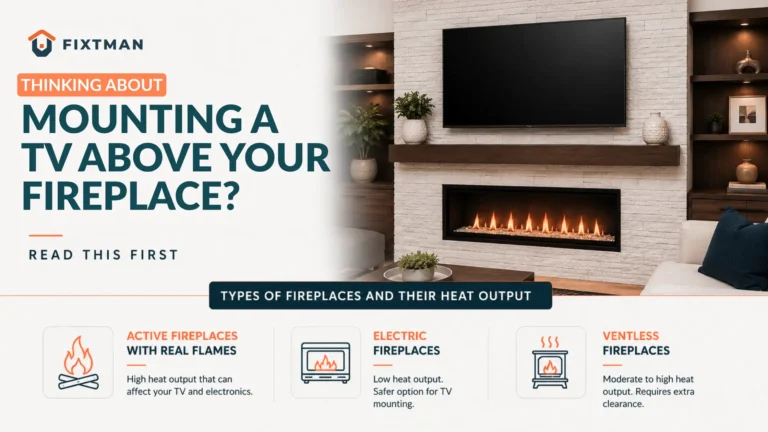
Mounting a TV Above a Fireplace
A TV mounted above a fireplace is often positioned higher than normal eye level. A tilt mount can angle the screen downward toward viewers and improve viewing comfort. Before installation, also check the fireplace manufacturer’s clearance requirements and make sure heat exposure will not exceed the TV’s recommended operating conditions.
Bedroom TV Mounting
Bedroom TVs are often mounted higher on the wall so they can be viewed comfortably from the bed. A tilt mount can help angle the screen toward the viewer. A fixed mount can still work if the TV is installed at an appropriate height and the viewing angle is comfortable.
Living Room and Multi-Seat Layouts
A fixed mount can work well when most viewers sit directly in front of the television. If seating positions or screen height create viewing-angle issues, a tilt mount can provide additional flexibility.
For rooms with significant side-to-side viewing, a full-motion mount may be worth considering because tilt mounts only adjust vertically.
Corner Wall Installations
Corner installations can present additional challenges because of viewing angles and available wall space. A fixed mount can work when the TV is positioned correctly, but it does not allow post-installation angle adjustment. A tilt mount can help with vertical positioning, although it will not provide the side-to-side movement offered by a full-motion mount.
Outdoor or Covered Patio TVs
Outdoor TVs may need specialized mounting hardware designed for the environment and the TV’s weight. Consider weather exposure, viewing height, and glare when selecting a mount. A tilt mount can be useful on covered patios because changing the screen angle can help manage sunlight and reflections.
Conclusion
When comparing tilt vs fixed TV wall mount options, neither is universally better. A fixed mount is a practical choice when you want a slim profile and your TV is positioned at a comfortable viewing height. A tilt mount provides more flexibility when the TV is mounted higher or glare is an issue. If you want help choosing and installing the right mount, Fixtman’s professional TV mounting service can handle the installation for you. Experienced technicians arrive with the appropriate tools and can securely mount your TV while ensuring proper alignment.
Ready to mount your TV? Book professional TV mounting service with Fixtman today.

Frequently Asked Questions
Is a Tilt or Fixed Mount Better for a Bedroom TV?
A tilt mount can be useful for a bedroom TV because bedrooms often require higher wall placement. Tilting the screen downward can provide a more comfortable viewing angle from the bed.
Can I Upgrade From a Fixed Mount to a Tilt Mount Later?
Yes, you can generally replace a fixed mount with a compatible tilt mount. However, the new bracket must match your TV’s VESA pattern, weight, and wall mounting requirements.
How Much Does Professional TV Mount Installation Cost?
Professional TV mounting commonly costs around $150–$350 or more, depending on the TV size, wall type, mount, installation location, and additional services. Complex installations may cost more.
What’s the Best Mount Type for Above a Fireplace?
A tilt mount is often a practical choice because TVs above fireplaces are typically installed higher than standard viewing height. It allows the screen to angle downward toward the seating area.
Do Tilt Mounts Work With All TV Sizes and Brands?
Not automatically. A tilt mount must support your TV’s weight, screen size, and VESA mounting pattern. Check the mount’s specifications before purchasing to ensure compatibility.
How Long Does Professional Installation Take?
A standard TV mounting installation can often take around one to two hours. Larger TVs, difficult wall materials, fireplace installations, and cable management can increase the installation time.