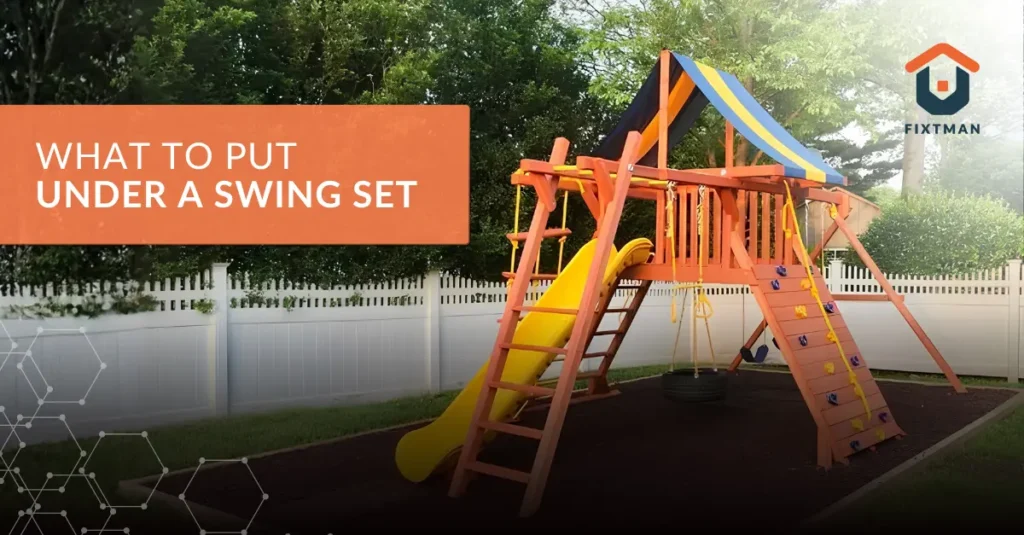

Discover what to put under a swing set for maximum safety, durability, and comfort. Compare mulch, rubber, sand, turf, and more to create a safer backyard play area.
Installing a swing set is one of the best ways to create a fun and active outdoor space for children. However, many homeowners focus entirely on choosing the right playset and overlook something equally important: what goes underneath it.
What to Put Under a Swing Set: The Complete Guide to Safe Backyard Ground Cover
The surface beneath a swing set plays a major role in playground safety. Children run, jump, climb, and swing, which means occasional falls are unavoidable. The right ground cover can help absorb impact, reduce the risk of injuries, improve drainage, and keep the play area looking clean and organized.
If you’re wondering what to put under a swing set, there are several options available.Each material comes with its own advantages and safety levels.This guide covers everything you need to know about choosing the best material for under a swing set.
Why the Ground Under a Swing Set Matters
Many homeowners assume that grass is enough protection under a playset. While grass may seem soft, it quickly becomes compacted. Once compacted, it provides very little shock absorption when a child falls.
According to playground safety recommendations from the U.S. Consumer Product Safety Commission (CPSC), falls are among the leading causes of playground injuries. Protective surfacing is one of the most effective ways which reduces the severity of these injuries.
A proper ground cover serves several purposes:
- Cushions the fall
- Reduces the impact injuries
- Creates a dedicated play zone
- Improves drainage after rainfall
- Prevents mud and dirt buildup
- Reduces weed growth
- Makes maintenance easier
- Enhances the appearance of the backyard
Understanding Swing Set Fall Zones
Before selecting a ground cover, it is important to understand the concept of a fall zone. A fall zone refers to the area surrounding the playground equipment, where a child could potentially land if they fall. This entire area should be covered with a protective surface.
Recommended Fall Zone for Swing Sets
Safety guidelines generally recommend:
- At least 6 feet of protective surfacing around all sides of the structure
- For swings, the front and the rear fall zone should extend twice the height of the swing beam
- The area should remain clear of obstacles such as rocks, landscaping borders, benches, and other equipment
For example, if the top beam of your swing set is 8 feet high, the fall zone in the front and behind the swings should extend approximately 16 feet. Planning the fall zone correctly ensures that the protective material can actually do its job when a fall occurs.
What Is the Best Material to Put Under a Swing Set?
There is no single answer to this question because every family has different priorities.Some homeowners prioritize safety above everything else, while others focus on appearance.
The most popular options include:
- Rubber mulch
- Engineered wood fiber
- Wood chips
- Sand
- Pea gravel
- Rubber tiles
- Poured in place rubber
- Artificial turf
Rubber Mulch
Rubber mulch is considered as one of the safest materials available for backyard playgrounds. Made from recycled rubber materials, it offers exceptional shock absorption.
Advantages of Rubber Mulch
- Excellent fall protection
- Long lifespan
- Does not decompose
- Resists insects and mold
- Requires minimal maintenance
- Drains water efficiently
Disadvantages of Rubber Mulch
- Higher upfront cost
- Can become hot in direct sunlight
- Less natural appearance
- May shift outside the play area over time
Best For
Families seeking maximum safety and low maintenance.
Engineered Wood Fiber
Engineered Wood Fiber is specially processed wood designed specifically for playgrounds. Unlike ordinary wood mulch, EWF is manufactured to provide consistent cushioning and accessibility.
Advantages of Engineered Wood Fiber
- Strong shock absorption
- Natural appearance
- Budget friendly
- ADA accessibility benefits when installed correctly
Disadvantages of Engineered Wood Fiber
- Requires maintenance
- Can compact over time
- Needs regular raking
Best For
For families who want a natural looking surface with solid safety performance.
Wood Chips and Playground Mulch
Wood chips remain one of the most common materials found beneath backyard swing sets. They provide decent cushioning and blend naturally into landscaping designs.
Advantages of Wood Chips
- Affordable
- Easy to find
- Attractive natural appearance
- Good drainage
- Decent impact protection
Disadvantages of Wood Chips
- Decomposes over time
- Needs replacement every few years
- Attracts insects
- Requires routine maintenance
Best For
Budget conscious homeowners who prefer natural materials.
Sand Under a Swing Set
Sand is a classic playground surface that many children enjoy because it doubles as a giant sandbox.
Advantages of Sand
- Affordable
- Soft texture
- Encourages creative play
Disadvantages of Sand
- Compacts when wet
- Easily displaced
- Requires regular cleaning
- Can hide debris and sharp objects
Best For
Younger children who enjoy sandbox style play and are also budget friendly.
Pea Gravel
Pea gravel was once extremely common beneath public playgrounds.The small rounded stones create a loose fill surface capable of absorbing impact of the fall.
Advantages of Pea Gravel
- Excellent drainage
- Low cost
- Long lasting
- Does not decompose
Disadvantages of Pea Gravel
- Choking hazard for toddlers
- Stones can scatter easily
- Requires frequent raking
- Less comfortable for crawling children
Several playground safety organizations discourage pea gravel in toddler play areas because small stones may be placed in mouths.
Best For
Families with older children and limited budgets.
Rubber Tiles
Rubber tiles provide a cleaner, more polished appearance than loose fill materials.These interlocking tiles create a stable and durable playground surface.
Advantages of Rubber Tiles
- Excellent shock absorption
- Easy to clean
- Attractive appearance
- Minimal displacement
- Professional look
Disadvantages of Rubber Tiles
- Higher cost
- Requires proper installation
- Can shift if installed incorrectly
Best For
Homeowners seeking a premium playground surface.
Poured in Place Rubber
Poured in place rubber is commonly found in commercial playgrounds, schools, and public parks.This surface is created by pouring rubber material directly onto the prepared base.
Advantages of Poured Rubber
- Outstanding impact protection
- Seamless surface
- Highly durable
- Customizable colors and designs
- Minimal maintenance
Disadvantages of Poured Rubber
- Expensive
- Professional installation required
- Difficult to repair
Best For
Homeowners creating a premium backyard playground.
Artificial Turf
Artificial grass has become increasingly popular for backyard play areas. Modern playground turf systems include safety padding underneath the turf layer.
Advantages of Artificial Turf
- Clean appearance
- Minimal maintenance
- No mowing required
- Good drainage
- Year round greenery
Disadvantages of Artificial Turf
- Higher installation cost
- Can become hot in sunlight
- Requires proper safety padding
Best For
Families seeking a clean, modern backyard aesthetic.
Materials You Should Never Put Under a Swing Set
Not every surface is suitable for playground use. Some materials provide almost no protection during falls.
Concrete
Concrete offers zero shock absorption and significantly increases injury risk.
Asphalt
Like concrete, asphalt is too hard for safe play.
Bare Dirt
Dirt quickly compacts and becomes extremely hard.
Natural Grass
Although common, grass loses its cushioning ability after repeated use and weather exposure.
How Deep Should Playground Material Be?
Depth is just as important as material selection. Safety recommendations generally suggest:
- Rubber Mulch (6-12 Inches)
- Wood Chips (9-12 Inches)
- Engineered Wood Fiber (9-12 Inches)
- Sand (9-12 Inches)
- Pea Gravel (9-12 Inches)
Many playground experts recommend starting with approximately 12 inches because loose fill materials naturally compress over time. A compressed depth of around 9 inches is commonly used for residential playgrounds.
Cost Comparison of Swing Set Ground Covers
Lowest Cost Options
- Sand
- Pea Gravel
- Wood Chips
Mid Range Options
- Engineered Wood Fiber
- Artificial Turf
Premium Options
- Rubber Mulch
- Rubber Tiles
- Poured-in-Place Rubber
While premium surfaces cost more initially, they often require less replacement and maintenance over time.
READ ALSO: Trampoline Installation Cost 2026
How to Install Ground Cover Under a Swing Set
Installing playground surfacing properly helps maximize safety and longevity.
Step 1: Measure the Fall Zone
Mark the entire play area, including clearance around swings.
Step 2: Remove Grass
Remove grass, weeds, and roots from the installation area.
Step 3: Level the Ground
Create a smooth and level surface.
Step 4: Add Landscape Border
Install playground edging or landscape timbers to contain loose-fill materials.
Step 5: Lay Weed Barrier
Optional weed barriers can help reduce weed growth beneath the surface.
Step 6: Add Surfacing Material
Spread material evenly to the recommended depth.
Step 7: Inspect Regularly
Check depth, drainage, and wear patterns throughout the year.
READ ALSO: How to Build a Swing Set That’s Strong, Safe, and Built to Last
Choosing the Right Ground Cover for Your Family
The best material depends on your priorities. If safety is your primary concern, rubber mulch, rubber tiles, or poured in place rubber are excellent choices. If you prefer a natural appearance, engineered wood fiber or wood chips work well.
Families looking for the most affordable option often choose sand or pea gravel, although both require maintenance. Artificial turf provides a modern appearance while reducing yard work. The ideal solution balances safety, maintenance, budget, and aesthetics.
Common Mistakes to Avoid When Installing Swing Set Ground Cover
Even the best playground surfacing can become less effective if it is installed incorrectly. One of the most common mistakes homeowners make is using an insufficient depth of material. Shallow surfacing does not provide adequate protection during falls.
Another mistake is failing to extend the protective surface throughout the entire fall zone. Many people overlook regular maintenance, allowing mulch, sand, or gravel to become compacted or displaced over time.
Choosing materials such as concrete, asphalt, or bare dirt can also increase the risk of injury. By avoiding these mistakes, you can create a safer and more durable play area.
How to Maintain Ground Cover Under a Swing Set
Proper maintenance helps preserve the safety and appearance of your swing set area. Loose fill materials such as wood chips, engineered wood fiber, sand, and pea gravel should be raked regularly to maintain even coverage.
Check the depth of the material several times a year and add more as needed to maintain recommended safety levels. Remove debris, weeds, and any sharp objects that may accumulate in the play area.
For rubber mulch, rubber tiles, or artificial turf, cleaning and inspections can help identify any problems before it becomes a safety concern. Consistent maintenance ensures long lasting protection and keeps the playground looking its best.
Choosing Fixtman Services for Swing Set Ground Preparation and Installation
Creating a safe play area involves more than simply choosing the right ground cover. Proper site preparation, fall zone planning, edging installation, and surfacing placement all play an important role in safety.
If you want a professionally installed swing set area, Fixtman Services can help. Whether you’re installing a new playset or upgrading an existing one, working with experienced professionals can help ensure your swing set area is safe, durable, and ready for years to come.
Final Thoughts on What to Put Under a Swing Set
Choosing what to put under a swing set is one of the most important decisions you can make when building a backyard play area. The right ground cover helps protect children from injuries, improves drainage, keeps the space clean, and extends the life of the play area.
For most families, rubber mulch and engineered wood fiber offer the best combination for safety and value. Homeowners seeking a premium solution may prefer rubber tiles, poured in place rubber, or artificial turf. Budget conscious families can still create a safe environment using properly maintained wood chips, sand, or pea gravel.
No matter which material you choose, ensuring proper depth, maintaining the fall zone, and regularly inspecting the surface will help create a safer and more enjoyable play space for years to come.
Frequently Asked Questions
What is the safest material to put under a swing set?
Rubber mulch is generally considered the safest option because it provides excellent impact absorption.
Is grass safe under a swing set?
No, grass compacts quickly and offers very little protection against falls.
How deep should playground material be under a swing set?
Most playground safety guidelines recommend maintaining a depth of 9–12 inches.
Can I use regular mulch under a swing set?
Yes, but playground-grade mulch provides better cushioning and safety performance.
Is sand a good choice for under a swing set?
Yes, sand is affordable and soft, but it requires regular maintenance to remain effective.
Is artificial turf safe for playground use?
Yes, artificial turf can be safe when installed with proper shock-absorbing padding.
How often should swing set surfacing be replaced?
The replacement schedule depends on the material, but regular inspections are essential.
How much space should surround a swing set for safety?
A minimum of 6 feet around the structure and twice the swing beam height in front and back is recommended.
What is the most affordable ground cover for a swing set?
Sand, wood chips, and pea gravel are usually the most budget-friendly options.