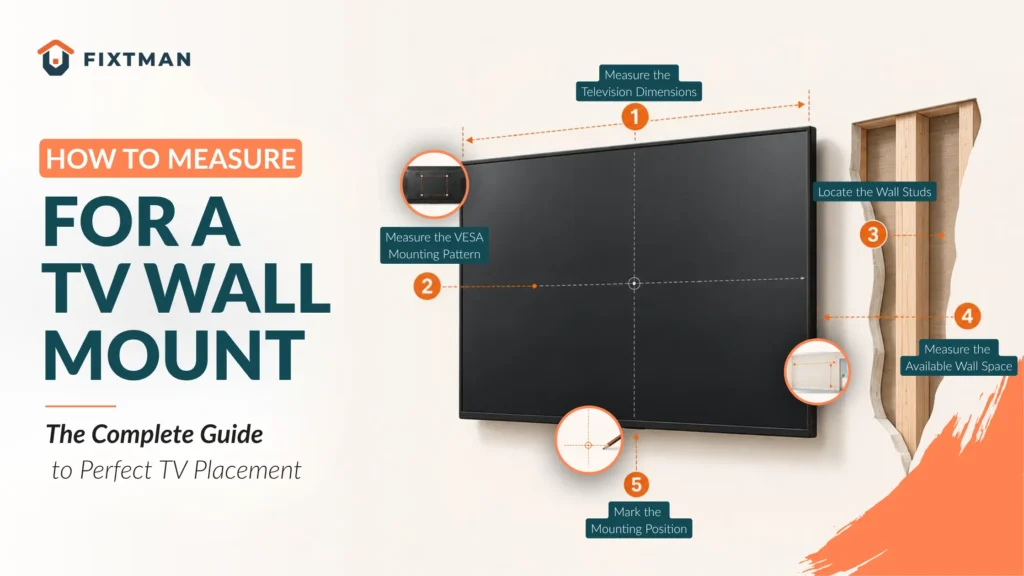

Installing a TV on the wall is one of the easiest ways to create a clean, modern, and space-saving entertainment area. However, proper measurements are essential before purchasing a wall mount or drilling into the wall. This guide explains how to measure for a TV wall mount step by step, helping you choose the right mount, position your TV correctly, and achieve a safe, professional-looking installation.
READ ALSO: Who Can Mount My TV? Guide to Finding Best TV Mounting Services
How to Measure for a TV Wall Mount Step by Step
Measuring for a TV wall mount is easier when you follow a clear process. Each measurement helps ensure the mount fits your television and aligns properly on the wall.
Measure the Television Dimensions
Start by measuring the full width, height, and depth of your television rather than relying only on the advertised screen size. These dimensions help determine how much wall space the TV will occupy.
Measure the VESA Mounting Pattern
Turn the television around and locate the four threaded mounting holes on the back. Measure the horizontal and vertical distance between the holes in millimeters to determine the VESA pattern..
Locate the Wall Studs
Use a stud finder to identify the wooden or metal studs behind the wall. Mark the center of each stud using a pencil before making any measurements. Mounting directly into studs provides the strongest support for the television.
Measure the Available Wall Space
Measure the height and width of the wall where you plan to install the television. Check for nearby windows, shelves, fireplaces, light switches, and electrical outlets that could interfere with placement. Ensure there is enough room for the television and the movement of tilting or full-motion mounts.
Mark the Mounting Position
Use a level and pencil to mark the desired mounting height on the wall. Confirm that the television will sit at eye level when viewed from your primary seating area. Double-check all measurements before drilling any holes into the wall.
Why Accurate TV Wall Mount Measurements Matter
Measuring before installation is the most important step in the TV mounting process.
Improve Viewing Comfort
Proper measurements allow you to mount the television at a comfortable viewing height. A well-positioned TV reduces neck and eye strain during long viewing sessions. It also creates a more enjoyable entertainment experience for everyone in the room.
Prevent Installation Mistakes
Incorrect measurements often lead to crooked installations, misplaced holes, or poorly centered televisions. Fixing these mistakes usually requires additional drilling and wall repairs. Measuring carefully before installation reduces the chances of errors.
Protect Your TV and Walls
A television that is mounted incorrectly places unnecessary stress on both the wall and the mounting bracket. Proper measurements help distribute the TV’s weight safely across the mounting hardware. This reduces the risk of the television falling or damaging the wall.
Key Measurements to Take Before Buying a TV Mount
Choosing the correct wall mount begins with understanding your television’s dimensions and the available wall space. Every measurement affects compatibility, stability, and overall viewing comfort
Measure Your TV Size
Television size refers to the diagonal distance from one corner of the screen to the opposite corner. Manufacturers list this measurement in inches, such as 55-inch or 65-inch TVs. However, this number does not represent the television’s actual width or height. Measuring the complete dimensions provides a more accurate understanding of the space required.
Measure the TV Width and Height
The overall width and height determine how much wall space the television will occupy. Larger bezels or speaker systems may increase the total dimensions beyond the screen size alone. Measuring these dimensions helps you center the television properly. Leave enough clearance around the television for ventilation.
Measure the TV Weight
The television’s weight can usually be found in the owner’s manual or manufacturer’s specifications. Selecting a mount designed for heavier televisions improves long-term safety. Weight also determines the type of wall anchors and mounting hardware required. Ignoring weight limits may cause installation failure.
Measure the VESA Mounting Pattern
Most televisions use a standardized VESA mounting pattern located on the back panel. Measure the horizontal and vertical distance between the mounting holes in millimeters. Common VESA sizes include 200 × 200 mm, 400 × 400 mm, and 600 × 400 mm.
Measure the Distance Between Wall Studs
Wall studs provide the strongest support for television mounting. In most American homes, studs are spaced either 16 or 24 inches apart. Measuring stud locations helps determine the best mounting position.
Finding the Ideal TV Mounting Height
Planning the height carefully creates a more enjoyable viewing experience. It also improves the overall appearance of the room.
Eye-Level Placement
The center of the television should generally align with the viewer’s eye level while seated. For most living rooms, this places the center of the screen about 42 to 48 inches above the floor. This guideline works well for fixed and tilting TV mounts.
Consider Viewing Distance
Matching the TV size with the room dimensions creates comfortable viewing. Proper measurements help maximize picture clarity.
| TV Size | Recommended Viewing Distance |
| 43 inches | 6–8 feet |
| 50 inches | 7–9 feet |
| 55 inches | 8–10 feet |
| 65 inches | 9–11 feet |
| 75 inches | 10–12 feet |
| 85 inches | 12–14 feet |
Account for Room Layout
Every room has a different seating arrangement and furniture layout. Consider sofas, recliners, beds, or dining areas before selecting the mounting location. The television should remain visible from the primary seating position without excessive head movement. Avoid placing it where sunlight creates glare on the screen.
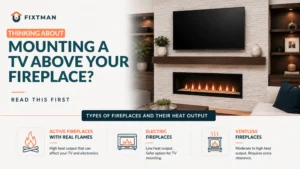
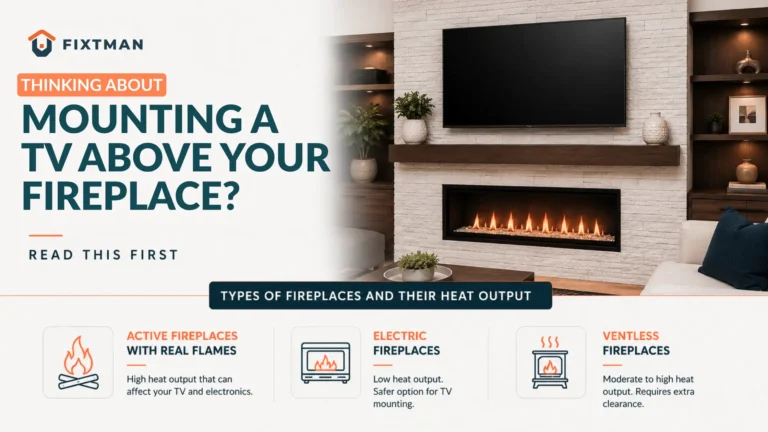
Mounting Above a Fireplace
Although mounting above a fireplace is popular, it is not always the best option. Heat generated by the fireplace may shorten the television’s lifespan if adequate clearance is not maintained.. If a fireplace installation is necessary, consider using a tilting wall mount. This helps direct the screen toward eye level.
Understanding TV Wall Mount Sizes and VESA Patterns
Choosing the correct wall mount requires more than matching the television size. Every mount has weight limits, VESA compatibility, and movement features that affect performance. Understanding these specifications makes selecting the right mount much easier.
What Is a VESA Pattern?
The VESA pattern is the standardized spacing between the four mounting holes on the back of a television. Manufacturers use this standard so televisions can fit compatible wall mounts from different brands..
Common VESA Sizes
Most televisions use one of several standard VESA patterns depending on their size and weight.
| TV Size | Typical VESA Pattern | Recommended Mount |
| 32–43 inches | 200 × 200 mm | Fixed |
| 43–55 inches | 300 × 300 mm | Tilting |
| 55–65 inches | 400 × 400 mm | Tilting or Full Motion |
| 65–75 inches | 600 × 400 mm | Heavy-Duty Full Motion |
| 75–85 inches | 800 × 400 mm | Heavy-Duty Mount |
Choosing the Right TV Wall Mount Based on Your Measurements
Fixed TV Wall Mount
A fixed wall mount keeps the television close to the wall without any movement.
- It creates a clean and modern appearance while maximizing available space.
- This option works best when the TV is installed at the ideal viewing height.
- Fixed mounts are generally the most affordable and easiest to install.
- They are ideal for living rooms where the seating position remains consistent.
Tilting TV Wall Mount
Tilting mounts allow the television to angle slightly upward or downward after installation.
- This feature helps reduce glare from windows and overhead lighting.
- They are especially useful when mounting a TV slightly above eye level. Tilting brackets maintain a slim profile while providing additional viewing flexibility.
- They are commonly used in bedrooms and family rooms.
Full Motion TV Wall Mount
A full-motion mount extends away from the wall and swivels in multiple directions. This allows the television to be viewed comfortably from different seating areas.
- These mounts require more wall clearance and stronger support because of their moving arms.
- They are perfect for open-concept homes or corner installations.
- Accurate measurements become even more important when using this type of mount.
Ceiling TV Mount
Ceiling mounts suspend the television from above rather than attaching it to the wall.
- They are commonly used in commercial spaces, gyms, kitchens, and apartments with limited wall space.
- Proper ceiling support and weight calculations are essential before installation. Adjustable poles allow the screen to hang at a comfortable viewing height.
- Professional installation is often recommended for ceiling-mounted televisions.
Measuring Different Wall Types Before Installation
Every wall material requires a different installation approach. Measuring the wall correctly helps determine the hardware and mounting method needed.
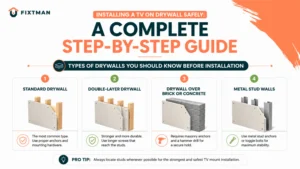
Drywall with Wood Studs
Drywall supported by wooden studs is the most common wall type in modern homes. Studs provide strong structural support for heavy televisions and full-motion mounts. Use a stud finder to locate the center of each stud before drilling.
Metal Stud Walls
Some apartments and commercial buildings use metal studs instead of wood. Metal studs require specialized toggle bolts or heavy-duty anchors for secure installation. Weight limitations may also differ depending on the stud thickness
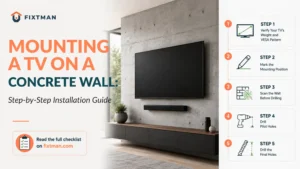
Concrete Walls
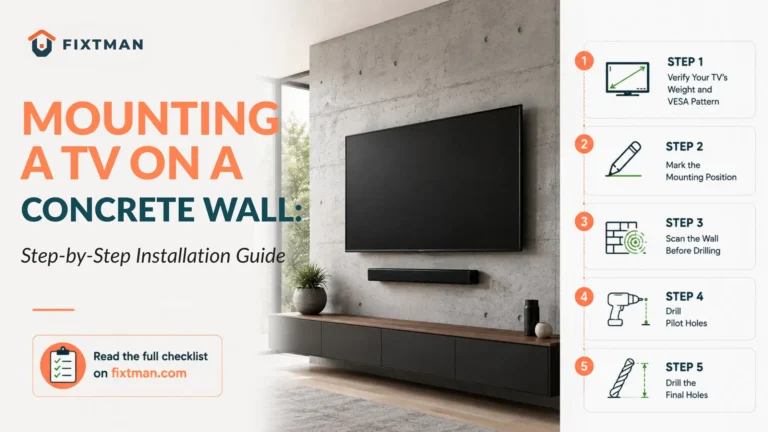
Concrete walls provide excellent strength for television mounting. However, they require masonry drill bits, concrete anchors, and a hammer drill for installation. Accurate measurements help prevent unnecessary drilling into the hard surface
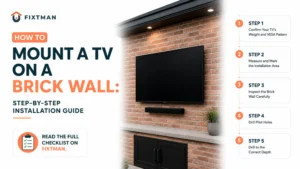
Brick Walls
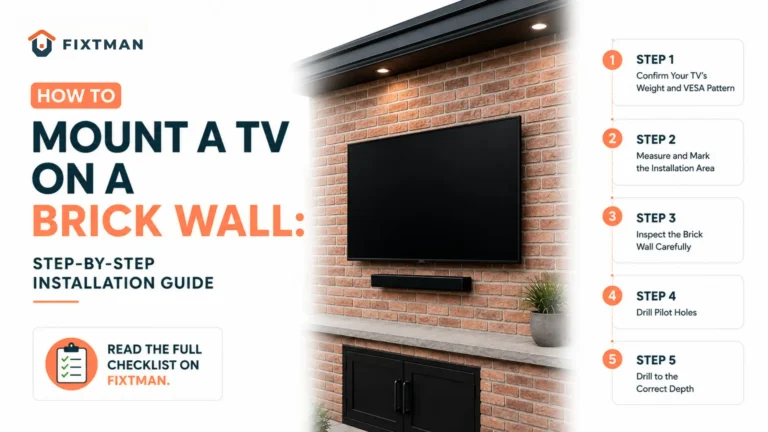
Brick walls can support heavy televisions when installed correctly. Mounting should always be performed through the brick rather than the mortar joints. Masonry anchors provide reliable support when paired with appropriate drill bits.
Let Fixtman Handle Your TV Wall Mount Installation
Measuring and mounting a television requires precision, the right tools, and careful planning. Fixtman provides professional TV wall mounting services that ensure secure installation on drywall, brick, concrete, and other wall types. Our experienced technicians handle everything from accurate measurements to final safety checks, helping you avoid costly mistakes and wall damage. Book your Fixtman TV mounting service today and enjoy a safe, perfectly positioned television without the hassle.
Frequently Asked Questions
Why do people mount TVs so high?
People often mount TVs too high because of fireplaces, limited wall space, or aesthetics. However, eye-level placement provides the most comfortable viewing experience.
How high should a 75-inch TV be from the floor?
The center of a 75-inch TV should typically be 42–48 inches from the floor for comfortable viewing while seated.
What is the ideal height for a 55-inch TV?
A 55-inch TV should generally be mounted with the center of the screen 42–48 inches above the floor.
Should I mount my TV higher in the bedroom?
Yes. Bedroom TVs are usually mounted slightly higher to provide a better viewing angle when lying down.
How do I know if my TV is mounted too high?
If you have to tilt your head upward to watch comfortably, your TV is likely mounted too high.