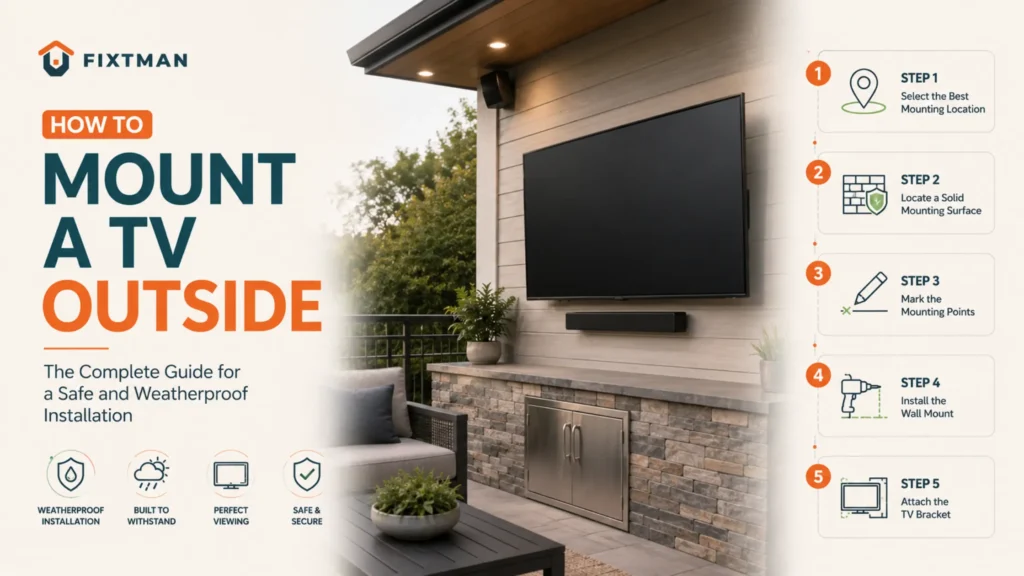

Creating an outdoor entertainment area is a great way to enjoy movies, sports, and family gatherings. Learning how to mount a TV outside correctly helps protect your investment while providing the best experience. Unlike indoor installations, outdoor TV mounting requires weather-resistant equipment, proper planning, and careful placement. This guide explains every step, from choosing the right location to protecting your TV.
Can You Mount a TV Outside?
Mounting a TV outdoors is possible, but it requires more planning than an indoor installation. Weather, sunlight, humidity, and temperature changes can all affect your television’s performance.
Step-by-Step Guide: How to Mount a TV Outside
Following the correct installation sequence helps prevent unnecessary drilling and alignment issues. Taking your time during each step improves the final result.
Step 1: Select the Best Mounting Location
Choose a location protected from direct rain and prolonged sunlight whenever possible. Make sure the viewing area offers comfortable seating and minimal screen glare. Verify there is enough space for ventilation around the television.
Step 2: Locate a Solid Mounting Surface
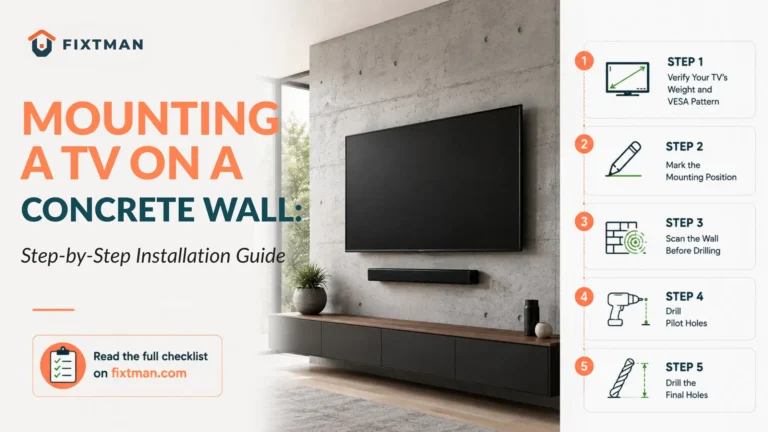
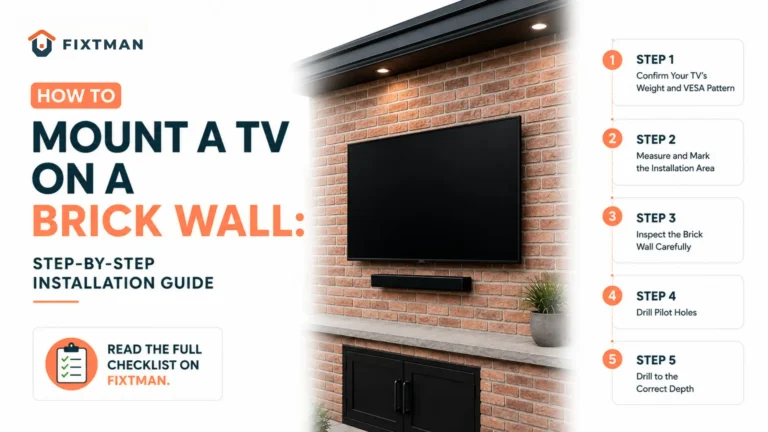
Use a stud finder to locate wooden studs behind exterior walls whenever possible. Brick and concrete walls should be checked for structural integrity before drilling. Avoid mounting directly onto vinyl siding without proper reinforcement.
Step 3: Mark the Mounting Points
Hold the wall bracket against the installation surface and use a level to ensure perfect alignment. Mark all drilling locations with a pencil before making any holes.
Step 4: Install the Wall Mount
Drill pilot holes using the appropriate drill bit for your wall material. Secure the mounting bracket with corrosion-resistant lag bolts or masonry anchors. Tighten all hardware firmly without overtightening the fasteners.
Step 5: Attach the TV Bracket
Install the mounting rails or bracket onto the back of the television according to the manufacturer’s instructions. Ensure every bolt is tightened securely using the recommended hardware. Verify the bracket matches the television’s VESA mounting pattern
Step 6: Mount the Television
Carefully lift the television onto the wall bracket with assistance from another person. Lock the mounting mechanism according to the manufacturer’s instructions. Gently test the television to confirm it sits securely on the mount.
Step 7: Connect Power and Entertainment Devices
Plug the television into a weatherproof electrical outlet using outdoor-rated equipment. Connect streaming devices, gaming consoles, or cable boxes using weather-resistant cables where needed.
Step 8: Perform a Final Inspection
Check every mounting bolt, cable connection, and locking mechanism before using the television. Adjust the viewing angle if you’re using a tilting or full-motion mount.
READ ALSO: Who Can Mount My TV? Guide to Finding Best TV Mounting Services
Outdoor TVs vs Indoor TVs
Outdoor TVs
Outdoor TVs are built with weather-resistant materials that can withstand moisture, dust, and temperature changes. They also feature brighter displays that remain visible even in daylight.
Indoor TVs
Indoor televisions are not designed for continuous outdoor exposure and should only be used in covered spaces. Selecting the right type of television improves durability and picture quality.
Things to Consider Before Mounting a TV Outside
Outdoor installations involve more than simply attaching a bracket to a wall. The location, weather conditions, electrical access, and viewing angle all influence the success of the installation.
Choose a Weather-Protected Location
- Select an installation area that offers overhead protection from rain, snow, and falling debris.
- Covered structures help reduce moisture exposure while protecting the television from harsh sunlight.
- Even weatherproof televisions benefit from additional shelter during severe weather.
Evaluate the Wall Material
- The mounting surface must support both the television and the wall bracket safely.
- Brick, concrete, and structural wood provide excellent strength for outdoor installations.
- Decorative siding or thin exterior panels usually require additional reinforcement before mounting.
Plan Power and Internet Access
- Your television should connect to a weatherproof electrical outlet without relying on extension cords.
- If you plan to stream content, make sure your outdoor Wi-Fi signal is strong enough.
- Running cables through weatherproof conduit helps protect them from moisture and sunlight. .
Consider Viewing Conditions
- Outdoor lighting changes throughout the day, affecting screen visibility. Position the television where direct afternoon sunlight is limited whenever possible.
- Viewing angles should remain comfortable from the main seating area. Proper placement improves picture quality without requiring maximum screen brightness.
Think About Weather Exposure
- Wind, humidity, dust, and seasonal temperature changes all affect outdoor electronics.
- Choosing stainless steel hardware and corrosion-resistant mounting brackets helps prevent rust over time.
- Regular inspections also help identify loose bolts or weather-related wear. Durable materials reduce maintenance and improve long-term reliability.
Where Can You Install an Outdoor TV?
The installation location has a direct impact on viewing comfort and equipment longevity. Some outdoor spaces naturally provide better protection than others..
Covered Patio
A covered patio is one of the safest places for an outdoor television. The roof shields the screen from rain while reducing glare from direct sunlight. Comfortable seating makes patios ideal for watching movies or sporting events.
Outdoor Kitchen
Installing a TV near an outdoor kitchen allows guests to stay entertained while cooking or dining. Position the television away from grills and heat-producing appliances whenever possible. Proper ventilation helps maintain safe operating temperatures.
Pergola or Gazebo
Pergolas and gazebos provide partial shade while creating an attractive outdoor living space. Depending on the roof design, additional weather protection may still be necessary. Mounting the television to a sturdy support beam improves structural stability.
Backyard Deck
A backyard deck creates a comfortable viewing area for family gatherings and outdoor parties. Installing the television beneath an awning or covered section offers additional protection. Make sure the supporting wall or post can safely carry the television’s weight.
Poolside Lounge
A poolside television creates a resort-like atmosphere for outdoor entertainment. Install the television far enough away to prevent direct water exposure and excessive humidity.
Tools and Materials You’ll Need
Using the right tools and weather-resistant materials helps ensure a safe, durable outdoor TV installation. The table below outlines the essential items you’ll need.
| Category | Items | Purpose |
| Essential Tools | Power drill, stud finder, level, measuring tape, socket wrench, screwdriver, safety glasses, work gloves | Used to measure, drill, align, and securely install the TV mount while ensuring safe installation. |
| Weatherproof Mounting Hardware | Stainless steel or galvanized lag bolts, washers, masonry anchors, exterior-grade screws | Resists rust and corrosion while providing strong, long-lasting support for outdoor mounting. |
| Outdoor Cable Protection | Weatherproof conduit, outdoor cable raceways, waterproof outlet covers, UV-resistant cable ties | Protects power and HDMI cables from rain, sunlight, moisture, and accidental damage for improved safety. |
READ ALSO: How to Measure for a TV Wall Mount to Perfect TV Placement
How to Protect an Outdoor TV
Even weather-resistant televisions need protection to perform well over time. Taking a few preventive measures helps extend the life of your outdoor entertainment setup.
Install Under a Covered Area
Mount the television beneath a patio roof, pergola, or covered porch whenever possible. Overhead protection reduces exposure to rain and harmful UV rays.
Use a Weatherproof TV Cover
A weatherproof cover protects the television from moisture, dust, insects, and debris when it is not in use. Choose a cover that fits your TV properly for maximum protection.
Protect Electrical Connections
Use weatherproof outlet covers and GFCI-protected outlets for safe outdoor power access. Keep power and HDMI cables inside conduit or protective raceways.
Clean and Inspect Regularly
Clean the screen with a microfiber cloth to remove dust and dirt safely. Inspect the wall mount and hardware for loose bolts or signs of corrosion.
Which Mount Is Right for You?
| If You Want To… | Choose This Mount |
| Save money | Fixed Mount |
| Reduce sunlight glare | Tilting Mount |
| Watch TV from different seating areas | Full-Motion Mount |
| Keep the TV closest to the wall | Fixed Mount |
| Adjust the viewing angle anytime | Full-Motion Mount |
Why You Need Fixtman for Outdoor TV Mounting?
Installing an outdoor TV requires proper planning and secure installation techniques. Fixtman uses weather-resistant hardware and professional cable management for long-lasting results. Book your Fixtman outdoor TV mounting service today for a safe and hassle-free installation.
Frequently Asked Questions
Can I mount a regular TV outside?
A standard indoor TV should only be used in fully covered outdoor areas. Open outdoor spaces require an outdoor-rated television for better durability.
What is the best wall mount for an outdoor TV?
The best mount depends on your installation location and viewing needs. Always choose a weather-resistant mount for outdoor use.
Does an outdoor TV need a weatherproof cover?
Yes, a weatherproof cover protects the TV from rain, dust, insects, and UV exposure. It helps extend the television’s lifespan between uses. A properly fitted cover offers the best protection.
How high should an outdoor TV be mounted?
Mount the television at a comfortable viewing height based on your seating area. The center of the screen should generally align with eye level.
Can outdoor TVs stay outside all year?
Most outdoor televisions are designed for year-round use in different weather conditions. A weatherproof cover provides additional protection during harsh seasons.
How much does professional outdoor TV mounting cost?
The price depends on the TV size, wall material, mount type, and installation complexity. Additional cable management or electrical work may increase the cost.