
If you are asking, can you put a fire pit under a gazebo? Using a fire pit under a gazebo is possible in some setups, but safety depends on key factors like ventilation, clearance distance, gazebo material, and fire pit type. Without proper precautions, risks such as fire hazards, smoke buildup, and heat damage can occur.
To understand this better, let’s look at the safety risks, required clearance rules, and the safest fire pit options for gazebo use.
READ ALSO: How to Decorate a Gazebo for a Wedding
Is It Safe to Use a Fire Pit Under a Gazebo?
Using a fire pit under a gazebo is not automatically safe or unsafe. It depends on how the gazebo is built and what type of fire pit you are using. Most traditional wooden or fabric gazebos are not designed for open flames underneath them. Safety comes down to three main factors: heat control, ventilation, and material resistance. Without these, the risk of fire accidents increases significantly. Metal or open-frame gazebos with high ceilings and proper airflow are generally safer compared to enclosed or low-roof fabric structures.
READ ALSO: Top Benefits of Using a Fire Pit Installation Service
Fire Pit Safety Risks Under a Gazebo
Understanding risks is the first step before deciding to install any fire source under a covered structure.
Fire Hazards and Heat Damage
The biggest risk is direct fire contact or heat buildup. Gazebo roofs, especially those made from wood, fabric, or vinyl, can overheat and ignite if the fire pit is too close. Even if flames do not reach the roof directly, prolonged heat exposure can weaken materials over time. This can cause structural damage or deformation.
Common risks include:
- Wooden beams are drying out and cracking
- Fabric roofs melting or catching fire
- Metal components are overheating and warping
- Decorative elements are becoming fire hazards
Carbon Monoxide Buildup
Fire pits that burn wood, propane, or charcoal produce carbon monoxide. In open outdoor spaces, this gas disperses easily, but under a gazebo, it can become trapped. If ventilation is poor, carbon monoxide can accumulate, creating a serious health hazard for anyone sitting inside.
- Fully enclosed gazebos
- Gazebos with curtains or screens closed
- Low-roof structures with limited airflow
Smoke Accumulation Issues
Smoke is not only uncomfortable but also a sign of poor airflow. Under a gazebo, smoke can collect and linger longer than in open spaces.
This leads to:
- Eye irritation
- Difficulty breathing
- Reduced visibility
- Unpleasant guest experience
If smoke cannot escape quickly, the setup is not suitable for fire use.
Risk of Sparks and Embers
Wood-burning fire pits naturally release sparks and small embers. When these rise, they can land on flammable surfaces such as fabric roofs or wooden beams.
This risk increases when:
- Wind is present
- Wood is dry and burning aggressively
- No spark protection is installed
Even a single ember landing on fabric can cause ignition.
Safe Clearance Distances for Fire Pits
Clearance distance is one of the most important safety rules when using a fire pit under any structure.
Distance from Gazebo Roof
A safe vertical clearance between the fire pit and gazebo roof is essential. In general, higher roofs are safer because heat rises and disperses. Lower ceilings increase risk significantly, especially if the structure is made of wood or fabric.
Distance from Walls and Furniture
Fire pits should always be placed away from walls, seating, and decorative items. Heat radiates outward, not just upward, so nearby objects can still become damaged. Keeping a safe perimeter around the fire pit reduces the risk of accidental ignition or overheating.
Clearance from Flammable Materials
Any flammable material should be kept away from the fire pit area. This includes cushions, curtains, rugs, and wooden decor. Even if materials are labeled “outdoor safe,” they are not always fire-resistant.
READ ALSO: How to Build a Wooden Gazebo in 7 Steps
Best Fire Pit Options for Use Under a Gazebo
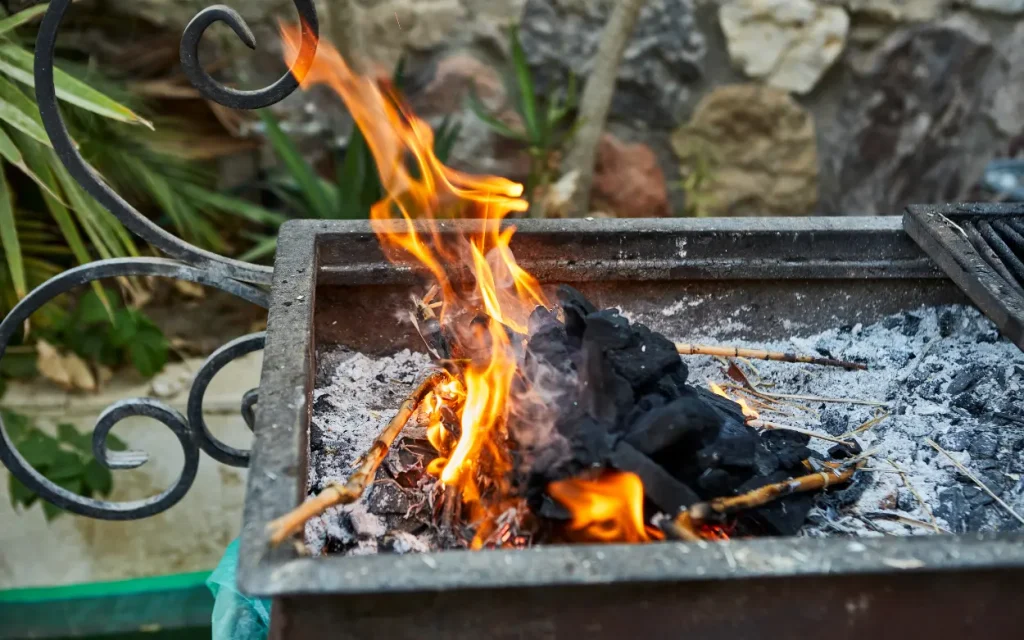
Not all fire pits are suitable for use under a covered structure. Choosing the right type is critical for safety.
Low-Profile Fire Pits
Low-profile fire pits are closer to the ground and produce more controlled flames. Because they are lower, heat is less likely to reach the gazebo roof directly. These are better suited for semi-open gazebos with high ventilation.
Fire Tables with Safety Features
Fire tables are one of the safest options. They are designed with controlled flame output and built-in safety mechanisms. Many models use propane, which burns cleaner than wood and produces less smoke and fewer sparks.
Fire Pits with Spark Screens
Spark screens act as a protective barrier that prevents embers from escaping. This significantly reduces fire risk under a gazebo. They are especially useful for wood-burning setups where sparks are more common.
How to Safely Use a Fire Pit Under a Gazebo
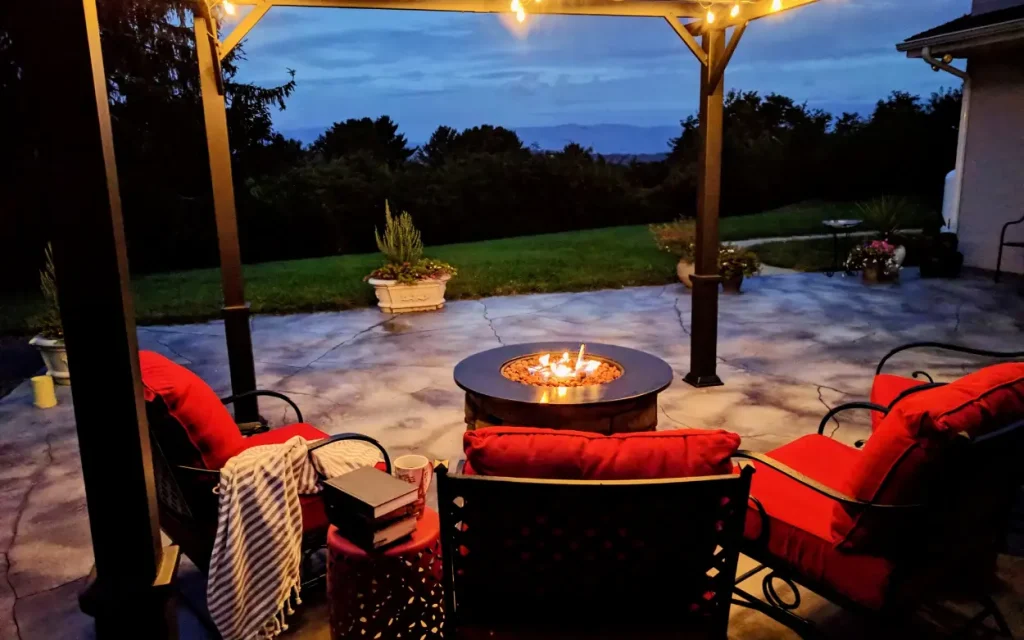
Safety practices are just as important as equipment choice. Even the safest fire pit can become dangerous if used incorrectly.
Choose the Right Location
Placement matters more than most people realize. The fire pit should be positioned in an open, central area.
Avoid:
- Corners with poor airflow
- Areas near curtains or walls
- Sloped or unstable surfaces
Ensure Proper Ventilation
Ventilation is essential for both safety and comfort. A gazebo with open sides is much safer than one that is enclosed.
Good ventilation helps:
- Disperse smoke
- Reduce heat buildup
- Prevent gas accumulation
Use Non-Flammable Materials
Surrounding materials should be fire-resistant to reduce risk.
Safe materials include:
- Stone bases
- Gravel surfaces
- Metal fire pit stands
Avoid anything soft, synthetic, or highly flammable.
Install Heat Shields or Barriers
Heat shields help protect the gazebo structure from rising heat. These are especially useful in semi-permanent setups.
They work by:
- Reflecting heat upward
- Reducing roof temperature
- Extending material lifespan
Never Leave Fire Unattended
This is the most important rule in fire safety.
Always:
- Stay within view of the fire
- Fully extinguish before leaving
- Keep water or an extinguisher nearby
Most fire accidents happen due to unattended flames.
READ ALSO: How to Decorate a Gazebo: Complete Guide for Style, Comfort, and Function
Best Fire Pit Options for Use Under a Gazebo
This section focuses again on safe product types and why they are preferred in enclosed outdoor setups.
Low-Profile Fire Pits
Low-profile designs help control flame height and reduce upward heat movement. This makes them more suitable for covered areas. They are often used in modern outdoor living spaces where safety and aesthetics are both important.
Fire Tables with Safety Features
Fire tables combine functionality and safety. They are designed for social settings and usually include adjustable flame controls. Because they run on propane, they produce less smoke, making them more suitable for gazebo environments.
Fire Pits with Spark Screens
Spark screens reduce the risk of embers escaping. This is important when using wood-burning fire pits. They act as a safety barrier while still allowing heat and light to pass through.
READ ALSO: How to Hang Gazebo Lights: A Complete Step-by-Step Guide
Additional Safety Considerations
Beyond equipment, environmental factors also play a role in safety. Wind can carry sparks in unpredictable directions, so even open gazebos require caution. Weather conditions should always be checked before use. Local regulations may also restrict open flames under structures in some areas, so checking guidelines is important before installation.
Professional Fire Pit Setup Support

Using a fire pit under a gazebo requires careful planning, proper clearance, and safe installation to avoid fire hazards or structural damage. Even small mistakes in placement or ventilation can increase risks. Fixtman service provides safe and proper fire pit setup guidance and installation support, ensuring correct placement, improved ventilation, and safer outdoor use for your gazebo area.
Conclusion
So, can you put a fire pit under a gazebo? Yes ,you can put a fire pit under a gazebo, but only if proper safety measures are followed, including good ventilation and using a suitable fire pit type like propane. Wood-burning fire pits are generally not recommended due to higher fire and smoke risks. Always ensure enough clearance and use non-flammable materials to reduce hazards.
Frequently Asked Questions
Can you use a propane fire pit under a gazebo?
Yes, propane fire pits are safer than wood-burning ones because they produce less smoke and fewer sparks, but ventilation is still required.
How high should a gazebo roof be for a fire pit?
Higher roofs are safer because heat rises. A taller structure reduces direct heat exposure and improves airflow.
Is a smokeless fire pit safe under a gazebo?
Smokeless fire pits reduce smoke but still produce heat and carbon monoxide, so ventilation and clearance rules still apply.
Can you use a fire pit under a pergola?
It depends on the material and openness. Open pergolas are safer than enclosed gazebos, but precautions are still necessary.