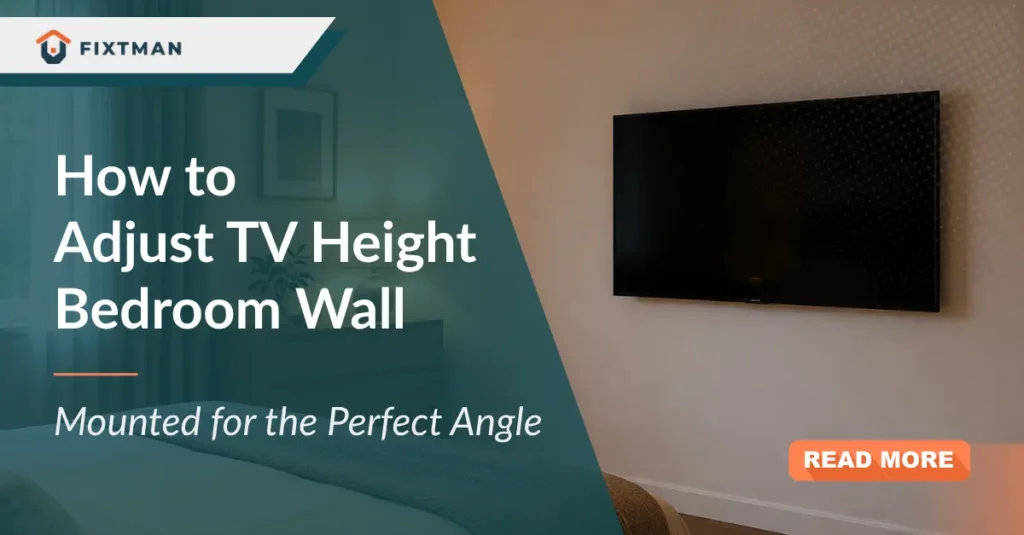

If you’ve ever finished a movie night with a stiff neck, you already know why learning how to adjust TV height in your bedroom matters more than almost any other home project. A bedroom TV isn’t watched the same way as a living room one. You’re usually reclining against pillows, lying flat, or propped up in bed, not sitting upright at eye level like you would on a couch. That means the “standard” 42-inch living room height everyone quotes online is often wrong for a bedroom, and a TV mounted at the wrong spot can leave you tilting your head for hours at a stretch.
The good news is that fixing it almost never means starting over. In most cases, you can adjust the height, tilt, or mount type of a TV that’s already on your wall to match how you actually watch it, without a full remount. This guide walks through exactly how to adjust TV height in a bedroom setup, with specific number ranges for reclined, flat, and sitting-up viewing, a step-by-step adjustment process, and the mount upgrades that make future adjustments painless.
Key to takeaway:
For most bedrooms, the center of the screen should sit somewhere between 42 and 67 inches from the floor, depending on how you watch. If you sit upright in bed, aim for 42–50″. If you recline against pillows (the most common setup), aim for 50–59″. If you watch lying completely flat, 59–67″ tends to feel right. Pair that with a 5–15° downward tilt so your neck stays relaxed. Not sure which applies to you? Use the 5-minute test below instead of guessing.
READ ALSO: Best TVs for Mounting on the Wall for a Clean and Modern Setup
Why Bedroom TV Height Works Differently
The Living-Room Rule Doesn’t Apply
Most general “how high to mount a TV” advice assumes you’re sitting upright, eyes level with the screen, at a fixed distance. That’s true in a living room. It’s rarely true in a bedroom.
Your Viewing Position Changes All Night
In bed, your head position shifts constantly. You might start the night sitting up against a headboard, slide down to recline on two pillows an hour later, and end up flat on your back by the time you fall asleep. A TV mounted using living-room math forces your neck into one of these positions and leaves it wrong for the others, which is exactly how people end up with the neck and eye strain that sends them looking for a fix in the first place.
There’s No Single “Correct” Height
The goal isn’t one universal number. It’s a height and tilt combination that stays comfortable across the two or three ways you actually watch TV in bed.
How to Adjust TV Height Bedroom
Measure Your Viewing Position
Start by sitting or lying in the position you will usually watch TV. Measure the distance from your eyes to the floor or the headboard. This becomes your reference for TV center placement. Consider pillow height if you often watch while leaning back. The tv mounting height bedroom should align with your line of sight for the most natural viewing angle.
Consider TV Size and Viewing Distance
The size of your TV and how far you sit from it also affects the ideal height. Larger TVs mounted too high can overwhelm your line of sight, while smaller TVs mounted too low may be hard to see. A general rule is that the center of the screen should be roughly at eye level when lying or sitting. Adjust slightly based on personal comfort and distance from the wall.
READ ALSO: From Purchase to Installation: Complete TV Mounting Guide
Mounting Above Furniture
If your TV is above a dresser or cabinet, take that height into account. Ensure the bottom edge of the TV is not too close to the furniture to avoid blocking airflow or interfering with decor. Using a tilting mount can help adjust the angle if the TV must be mounted higher than ideal due to furniture placement.
Using a Tilting or Swivel Mount
Tilt and swivel mounts add flexibility for wall mounted TVs. They allow the screen to be angled down toward your line of sight, which is especially helpful if mounting above furniture or slightly higher than eye level. Even with an adjustable mount, it’s best to start with the best tv height bedroom as close as possible to your natural line of sight. Tilt adjustments are meant to fine tune, not compensate for poor placement.
Safety and Wall Considerations
Ensure your wall can support the TV weight. Use a stud finder to anchor the mount securely into studs rather than drywall alone. Improper mounting can lead to accidents or damage to both your TV and wall. Follow all manufacturer instructions and double check mounting brackets for level placement. A secure installation prevents wobbling or uneven angles.
Test and Adjust Before Finalizing
Before drilling holes or permanently securing the mount, use painter’s tape to outline the TV size on the wall. Sit or lie in bed and see how the screen looks at various heights. This step is a simple and effective way to visualize placement and ensure comfort before committing to the final installation.
Cable Management
Once the TV is mounted at the correct height, consider cable organization. Hiding wires behind the wall or using cord covers improves aesthetics and keeps the area safe, especially in a bedroom where children or pets might pull on cables.
Regularly Reevaluate Your Setup
Your ideal TV height may change if you switch beds, add a new headboard, or change pillows. Take time occasionally to ensure your tv height bedroom wall mounted setup remains comfortable and functional. Small adjustments can make a noticeable difference.
READ ALSO: Expert Tips for Efficient TV Wall Mounting
The Best TV Height by Viewing Position
Reclining Against Pillows (Most Common)
This is how most people actually watch bedroom TV: propped against two or three pillows or a headboard. For this position, aim for the screen’s center between 50 and 59 inches from the floor.
Lying Completely Flat
Watching flat on your back means your eyeline points almost straight up, so the screen needs to sit noticeably higher: 59 to 67 inches from the floor, with a steeper downward tilt to compensate.
Sitting Upright in an Adjustable or Tall Bed
If you use an adjustable base or sit fully upright against a tall headboard, your eyeline is closer to a living-room setup: 42 to 50 inches from the floor works well here.
Height by Screen Size and Viewing Position
Combine your viewing position with your screen size for a tighter starting point, then fine-tune with the 5-minute test.
| Screen Size | Sitting Upright | Reclining on Pillows | Lying Flat |
|---|---|---|---|
| 43″–50″ | 42″–46″ | 50″–54″ | 59″–62″ |
| 55″–65″ | 44″–50″ | 52″–57″ | 61″–65″ |
| 70″–75″+ | 46″–50″ | 54″–59″ | 63″–67″ |
How to Adjust a TV That’s Already Mounted (Step-by-Step)
This is the part most bedroom TV guides skip, and it’s usually what people searching “how to adjust TV height bedroom” actually need: their TV is already up, and it just isn’t right yet.
Tools You’ll Need
- Stud finder
- Level (a phone level app works fine)
- Socket wrench or Allen key set (check your mount’s hardware)
- A second person, for safety and to hold the TV steady
- Tape measure
Identify Your Current Mount Type
Check whether you have a fixed, tilting, or full-motion mount. This determines whether you can adjust in place or need to reposition the mount itself. Fixed mounts have no adjustment beyond unbolting and remounting; tilting and full-motion mounts usually have tool-free tilt adjustment built in.
Loosen, Reposition, and Re-Level
With a second person supporting the TV, loosen (don’t fully remove) the mounting hardware. If you’re changing height, you’ll typically need to unbolt the wall plate and remount it at studs closer to your target height from the 5-minute test. Always re-locate studs; never rely on the old holes alone for a height change of more than an inch or two.
Adjust the Tilt
Most tilting and full-motion mounts have a tension knob or ratchet mechanism on the arm itself, no need to touch the wall plate. Loosen it, angle the screen down to your target tilt, and retighten evenly on both sides so the screen doesn’t tilt sideways.
Re-Test With the 5-Minute Method
Get back into your normal viewing position and repeat the test from earlier. Small differences (an inch or two, a couple of degrees of tilt) are normal to fine-tune after the first pass.
When You Need a New Mount Instead of Just an Adjustment
If your current mount is fixed (no tilt or swivel) and you need more than about 3–4 inches of height change, it’s usually faster and safer to upgrade to a tilting or full-motion mount than to keep drilling new holes in drywall.
READ ALSO: How to Mount a TV on the Wall Safely
Conclusion
Getting your bedroom TV height right isn’t just about looks it’s about creating a comfortable, relaxing viewing experience that fits how you actually watch. By aligning the screen with your natural line of sight, considering furniture and mounting options, and testing before installation, you can avoid strain and enjoy every moment.
Want to learn more about the right TV height? Check out our TV Height and Viewing Distance Guide. And if you’d rather skip the hassle, Fixtman offers a professional TV mounting service to make sure your TV is mounted securely, level, and at the right height without risking damage to your TV or wall.