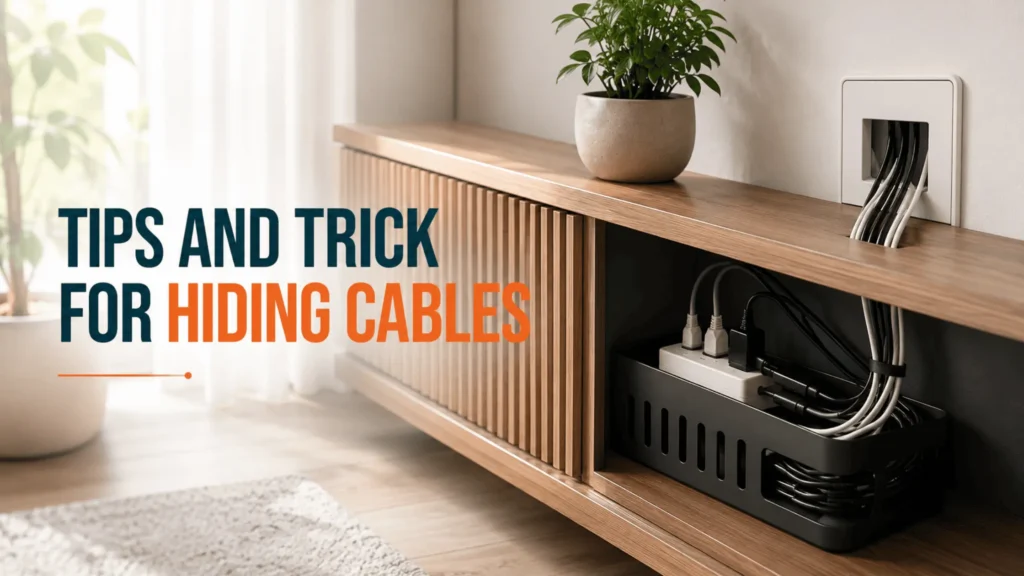

A beautiful wall mounted TV can look absolutely terrible when cables dangle everywhere. Messy cords create visual clutter that ruins your elegant entertainment setup, which is why learning how to hide cords on wall mounted TV can make such a big difference. The good news is that hiding those cables is easier than you might think.
Whether you want to run cables inside the wall or use surface solutions, there’s a method that works for your situation. This complete guide covers every option from professional in-wall installation to simple renter friendly solutions. Fixtman will show you exactly how to achieve that clean, cable free look you’ve been wanting.
How to Hide Cords on a Wall Mounted TV
There are several ways to hide TV cords depending on your wall type, budget, and living situation. In-wall cable installation offers the cleanest look, while cable raceways are an easy, no-drill alternative.
In-Wall Cable Installation
Running cables inside the wall creates the cleanest and most seamless appearance. This method keeps wires completely out of sight and works especially well for permanent TV installations.
Cable Raceways
Cable raceways cover your wires along the surface of the wall without requiring major modifications. They are a practical option for renters or anyone looking for a quick and affordable solution.
Combining Cable Hiding Methods
You can also combine methods, such as hiding power cables inside the wall and using covers for other wires. This creates a neat, professional looking setup while giving you flexibility based on your wall and cable configuration.
How to Hide TV Cords Inside the Wall
- Keeps TV cables completely hidden for a sleek, clutter free setup.
- Creates a polished look that blends seamlessly with your wall.
- Requires careful planning, the right tools, and proper cable routing.
- Provides a permanent cable management system that keeps your entertainment area organized.
Gather the Required Tools and Materials
Before starting your in wall cable installation, gather all necessary tools and materials. You’ll need a power drill with bits, drywall saw, stud finder, fish tape, and electrical conduit. Also gather low voltage cable running kit and appropriate cables for your devices.
Protective equipment is essential for this project. Wear safety glasses to protect from drywall dust during cutting. A dust mask prevents inhalation of drywall particles that can irritate your lungs during the work.
| Tools Needed | Purpose | Estimated Cost |
| Power drill with bits | Create holes and drive fasteners | $40 to $100 |
| Drywall saw | Cut openings in drywall | $10 to $20 |
| Stud finder | Locate studs in walls | $15 to $50 |
| Fish tape | Pull cables through walls | $10 to $25 |
| Electrical conduit | Protect cables inside wall | $20 to $40 |
| Low voltage kit | Complete cable management system | $30 to $80 |
| Safety equipment | Protect yourself during work | $10 to $20 |
Install an In-Wall Cable Management Kit
In-wall cable management kits make it easy to hide TV cables behind the wall for a clean, professional look. They typically require openings behind the TV and near the outlet, so use a stud finder to avoid damaging wall supports.
For electrical outlet installation or new circuits, it’s best to hire a professional electrician.
Route the Cables Through the Wall
Fish tape makes it easier to pull cables through wall spaces. Feed it from the TV opening to the outlet, attach the cables securely, and pull slowly to avoid damage.
Use electrical conduit to protect and organize cables inside the wall. It prevents damage from drywall edges, studs, and friction, keeping your cables safe for longer.
Test the Connections Before Finishing
Before closing up your wall openings, test all connections thoroughly. Plug in your TV and verify that power works correctly at the outlet. Check that HDMI, cable, and other connections function properly from inside the wall.
Test all devices connected to your TV system simultaneously. This confirms that your electrical circuit can handle the total power draw without issues. Only close up your walls after confirming everything works perfectly.
How to Hide TV Cords Without Cutting Into the Wall
Surface solutions for hiding cables work great when you can’t cut into your walls. These methods are ideal for renters, apartments, or situations where modifying walls isn’t possible. Many surface solutions look professional when installed correctly.
Install a Paintable Cable Raceway
Cable raceways are channels that mount to your wall surface and hide cables inside. Paintable raceways can be painted to match your wall color, becoming nearly invisible. These offer a clean appearance without the complexity of in-wall installation.
Measure your cable run distance from the TV location to the outlet below. Purchase a raceway system long enough to cover the entire distance. Most systems come with adhesive backing or can be fastened with small brackets for permanent installation.
Apply the raceway along your wall in a straight vertical line for the best appearance. Paint the raceway with your wall color after installation to blend it seamlessly. The result looks much cleaner than exposed cables running down your wall.
Use Decorative Cord Covers
Fabric cord covers are a simple, stylish way to hide multiple TV cables. Choose colors or patterns that match your room for a cleaner look.
Bundle cables with Velcro straps before placing them inside the cover. For cables along baseboards, choose a cover that blends with your trim or flooring.
Hide Cords Behind a Floating Shelf
A floating shelf below your TV can hide cables while providing space for consoles, cable boxes, and decor. Route cables behind the shelf for a clean, clutter-free look.
This solution works especially well above fireplaces or in tight spaces. It keeps everything organized while adding a stylish feature to your room.
Conceal Wires with a TV Console
A TV console or media stand placed below your mounted TV hides countless cables from view. Route all cables down the wall and behind the console where they connect to devices inside. The console body completely blocks sight of the messy cable arrangement.
Choose a console that complements your room decor and matches your TV size proportions. Deep consoles offer more hiding space for cables and equipment than shallow models. Look for consoles with cable management features like pass-throughs and tie-down points.
This solution works great for hiding power cords, HDMI cables, and other connections neatly. The console becomes part of your room decor while performing critical cable management function. You gain storage for remotes, electronics, and decorative items as a bonus.
Organize Loose Cables with Velcro Straps
Velcro straps bundle cables together neatly and prevent tangling that creates a messy appearance. These reusable straps work on any cable type and can be repositioned easily. They cost very little compared to permanent cable management solutions.
Group similar cables together with individual straps for better organization. Color coded straps help identify different cable types quickly for future adjustments. The organized appearance looks intentional and clean rather than chaotic.
Mounting TVs above fireplaces creates unique cable hiding challenges due to the wall space. Fireplaces typically prevent running cables inside the wall because of heat and structure constraints. Creative surface solutions work best for fireplace TV installations.
| Fireplace Setup Challenge | Best Solution | Why This Works |
| Heat concerns | Side raceway routing | Keeps cables away from fire source |
| Limited outlet access | Outlet extension kit | Adds convenient outlet at TV level |
| Stone or brick walls | Surface conduit system | Can’t drill through masonry easily |
| Narrow mantel space | Cable behind trim | Hides cables along existing edges |
What Are Creative Ways to Hide TV Cords?
Beyond traditional cable management, creative design solutions can hide cords while enhancing your room. These artistic approaches transform cable management into intentional design elements. They prove that hiding cables doesn’t have to be boring or utilitarian.
Create a Gallery Wall Around the TV
A gallery wall can make TV cables less noticeable by drawing attention to surrounding artwork. Arrange framed art and photos around the TV to create a stylish, intentional look.
Mix different frame sizes and spacing for visual interest. This approach can even help conceal cable raceways behind the artwork.
Paint Cord Covers to Match the Wall
Painting cord covers to match your wall color makes them blend in almost completely. Use a matching paint and apply thin, even coats for a seamless finish.
It’s a simple, budget-friendly solution that gives your TV setup a clean, professional look without expensive installation.
Use Wall Panels or Slat Walls
Decorative wall panels and slat walls can hide cables while adding style to your space. Install them over cable routing areas for a clean, seamless look.
Wood slat walls work especially well in modern or rustic rooms. Their textured design makes cable management feel like part of the décor.
Hide Cords with Decorative Furniture or Plants
Large plants, decorative screens, and furniture can easily hide TV cables while adding style to your room. Place them strategically to cover cables along walls or baseboards.
Tall plants can hide vertical cables, while screens and console tables conceal horizontal runs. Plus, these solutions are flexible and easy to rearrange.
Conclusion
Hiding TV cords transforms your wall mounted setup from messy to magnificent instantly. You have numerous options ranging from simple surface solutions to professional in-wall installations. Choosing the right method depends on your situation, budget, and aesthetic preferences.
Whether you rent or own, have limited budget or want professional results, there’s a cable hiding solution perfect for you. Fixtman specializes in professional cable management and mounting that keeps your TV looking beautiful. Contact us today to discuss your specific cable hiding needs and get expert recommendations for your situation.

FAQs
1. Is It Safe to Run TV Power Cords Inside a Wall?
Yes, when using proper electrical conduit and following electrical codes, but hiring a licensed electrician ensures complete safety and code compliance.
2. How Can You Hide TV Cords Without Drilling?
Use adhesive-backed cable raceways, decorative cord covers, floating shelves, TV consoles, or plants to hide cables without drilling into walls.
3. What Is the Best Way for Renters to Hide TV Cords?
Paintable cable raceways with adhesive backing, decorative cord covers, and furniture based solutions work great for renters without damaging walls.
4. How Much Does It Cost to Hide TV Cords?
Simple solutions like velcro straps and decorative covers cost $10 to $50, while professional in-wall installation runs $200 to $400 total.
5. Can You Hide Soundbar and Other Device Cables Too?
Absolutely. Cable raceways, conduit systems, and furniture solutions hide cables for soundbars, gaming consoles, and all connected devices simultaneously.
6. What Size Cable Raceway Do I Need for My TV?
Choose raceways that accommodate the total thickness of all cables bundled together, typically 1 to 2 inches wide for most TV setups.
7. Will Hiding Cables Inside the Wall Affect WiFi or Signal Quality?
No, low voltage cables like HDMI and coaxial stay unaffected by wall installation, and WiFi signals pass through walls normally regardless.
8. How Do You Hide Cables When You Have a Wall Mounted Soundbar?
Run soundbar cables alongside TV cables using the same raceway system or separate nearby raceway for organized cable management.
9. Can You Hide Cables Behind Drywall Without Electrical Conduit?
Not recommended, electrical conduit protects cables from damage and meets safety codes, making it essential for professional in-wall installations.
10. What’s the Easiest Cable Hiding Solution for Someone Without Tools?
Adhesive-backed cable raceways and decorative cord covers are the easiest solutions requiring no tools, just measuring and careful application.