
Wall mounting a television has become one of the most popular ways to create a clean, modern, and functional living space. However, installing a TV on the wall also comes with certain drawbacks, including installation costs, wall modifications, and limited flexibility. Understanding the pros and cons of TV wall mounting can help you decide whether it’s the best option for your home.
READ ALSO: How to Hide Cords From a Mounted TV Cleanly
Pros of Mounting a TV on the Wall
Wall mounting offers several practical and visual benefits for modern homes. Below are the main advantages of mounting your TV.
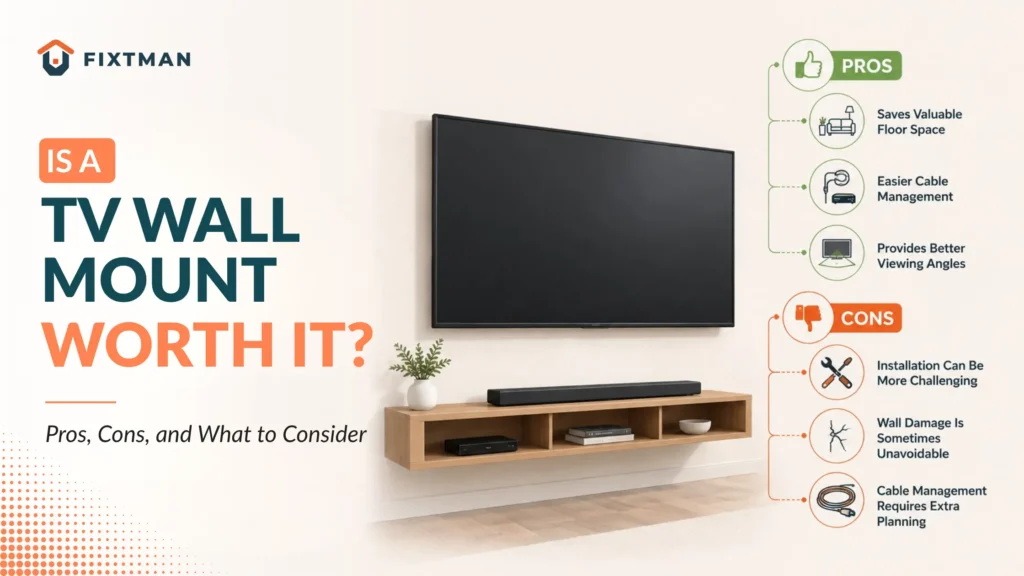
Saves Valuable Floor Space
Wall mounting removes the need for bulky TV stands and entertainment centers. This creates more usable floor space, especially in smaller rooms and apartments. The extra space makes furniture arrangement easier and less crowded.
Easier Cable Management
Wall mounting makes it easier to organize and conceal power and HDMI cables. This creates a cleaner, more organized entertainment area while reducing visible clutter. Cable management systems also improve safety by keeping cords out of the way.
Provides Better Viewing Angles
Wall mounts allow you to position the television at a comfortable height. Tilting and full-motion mounts help reduce glare from windows and lights. Better positioning minimizes neck and eye strain during viewing.
Improves Household Safety
A securely mounted TV is less likely to tip over than one on furniture. This makes wall mounting a safer choice for homes with children or pets. Proper installation keeps the television firmly attached to the wall..
Makes Cleaning Easier
Without a TV stand, cleaning underneath the television becomes much simpler. Dust has fewer places to collect around the entertainment area. Vacuuming and mopping also become faster and more convenient.
Increases Your Home’s Resale Value
A professionally mounted TV can give your living space a modern and updated appearance. Clean installations with concealed cables are attractive to many potential buyers. While it may not significantly increase a home’s value on its own, it can enhance the overall appeal of the property.
Cons of Wall-Mounted TVs
Understanding these disadvantages helps you make an informed decision. Consider the following factors before mounting your television.
Installation Can Be More Challenging
Wall mounting requires accurate measurements, drilling, and proper hardware selection. Larger televisions often need two people for safe installation. Some wall types require specialized tools and anchors
Wall Damage Is Sometimes Unavoidable
Installing a wall mount requires drilling holes into the wall surface. Improper installation may crack drywall or damage finishes. Although most holes can be repaired, some repairs may require extra work.
Limited Flexibility After Installation
Moving a wall-mounted television usually requires drilling new holes. Furniture placement often becomes centered around the mounted TV. Rearranging the room can be more difficult after installation.
Cable Management Requires Extra Planning
Power and HDMI cables may remain visible after installation. Cable covers or in-wall routing create a cleaner appearance. Planning cable placement before mounting saves time later.
It Can Be Expensive
Wall mounting involves more than just buying a TV mount. Professional installation, cable concealment, and mounting on brick or concrete walls can increase the overall cost. The final price depends on the complexity of the installation.
TV Wall Mount vs TV Stand
| Feature | TV Wall Mount | TV Stand |
| Floor Space | Saves space | Requires furniture |
| Appearance | Modern and clean | Traditional setup |
| Safety | More secure | Can tip over |
| Installation | Requires drilling | No installation |
| Flexibility | Permanent location | Easy to move |
| Cable Management | Cleaner with concealment | Easier cable access |
| Best For | Modern homes, apartments | Renters, temporary setups |
Different Types of TV Wall Mounts
Fixed Wall Mount
Fixed mounts keep the television close to the wall for a sleek appearance. They are ideal when the TV is already positioned at the correct viewing height. These mounts are affordable and simple to install.
Tilting Wall Mount
Tilting mounts allow the television to angle slightly upward or downward. This helps reduce glare from windows and overhead lights. They are useful when installing the TV above eye level. The added flexibility improves viewing comfort.
Full-Motion Wall Mount
Full-motion mounts extend away from the wall and swivel in multiple directions. They are ideal for open-concept rooms or corner installations. Users can easily adjust the viewing angle for different seating positions.
Is a TV Wall Mount Right for Every Room?
Living Rooms
Wall-mounted TVs help create a spacious entertainment area while improving viewing angles. They work particularly well with larger screens and open seating arrangements.. Living rooms are the most popular location for TV mounting.
Bedrooms
Mounting a television in the bedroom frees up dresser space and improves visibility from the bed. Tilting mounts allow comfortable viewing while lying down. Bedrooms are ideal for medium-sized televisions.
Apartments
Apartment residents should review lease agreements before drilling into walls. Some landlords permit TV mounting if repairs are completed before moving out. No-drill mounting alternatives may also be suitable for renters.
Is Professional TV Wall Mounting Worth It?
Professional TV wall mounting offers a safe, secure, and hassle-free installation while ensuring your television is properly positioned for the best viewing experience. Experienced technicians use the correct hardware for different wall types, provide clean cable management, and reduce the risk of wall damage or improper installation. If you’re unsure who can handle the installation, learn more about Who Can Mount My TV? and the professionals who can help.
Although it may cost more than a DIY approach, the added safety, convenience, and professional finish make it a worthwhile investment. Whether you’re mounting a small bedroom TV or a large home theater display, professional installation with Fixtman helps you enjoy a reliable and long-lasting setup.
Frequently Asked Questions
Is wall mounting better than using a TV stand?
Wall mounting saves space, improves safety, and creates a cleaner appearance, while TV stands offer easier relocation and installation.
Does wall mounting damage the wall?
Small mounting holes are necessary, but they can usually be repaired with filler and matching paint.
Are wall-mounted TVs safe?
Yes. When installed correctly using appropriate hardware, wall-mounted TVs are very secure.
Can every TV be wall mounted?
Most modern flat-screen televisions support VESA wall mounts, but compatibility should always be confirmed before purchasing.
How long does a TV wall mount last?
A quality wall mount can last for many years if it is installed correctly and periodically inspected for loose hardware.