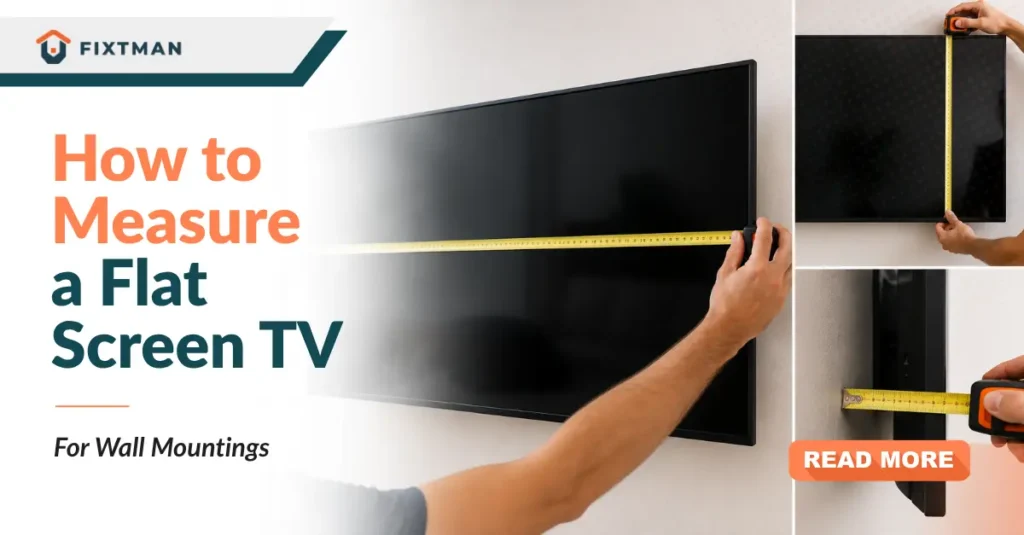

Many people assume measuring a TV is as simple as checking the diagonal size listed on the box, but that is only part of the picture. Width, height, depth, mounting hole placement, and available wall space all matter more than most people expect. To avoid costly errors, broken drywall, or having to remount everything, homeowners often choose to measure a flat screen TV with expert guidance that ensures every dimension is accounted for properly. So here is everything you need to know how to measure a flat screen TV.
Tools You Need to Measure a Flat Screen TV
Keep It Simple but Accurate
You don’t need a toolbox full of equipment to measure a TV correctly, but having the right basic tools makes the process much easier. A flexible measuring tape is essential, as it allows you to follow the edges of the screen accurately. A notepad or your phone is useful for writing measurements down so nothing gets forgotten halfway through.
Extra Help Makes a Difference
A level can come in handy later when you’re planning mounting height and alignment. If the TV is already mounted or awkward to reach, having a second person nearby to hold or steady it makes measuring safer and more precise.
How to Measure TV Width Height and Depth
Measuring the Screen Size
To measure the width of your TV, place the measuring tape from the left edge of the screen to the right edge. Avoid including the bezel unless the TV will be mounted very close to cabinets or wall edges. Next, measure the height from the bottom edge of the screen to the top.
Don’t Forget the Depth
Depth is often overlooked but plays an important role when choosing a wall mount. Measure from the back of the TV to the front of the screen. This tells you how far the TV will extend from the wall once installed. Taking width, height, and depth together gives you a clear idea of how much space the TV will actually occupy.
How to Measure a TV for Wall Mountings
Understanding Mount Compatibility
When measuring a TV for wall mounting, screen size alone isn’t enough. You also need to locate the mounting holes on the back of the TV. These holes follow a standard pattern known as VESA, which determines which wall mounts will fit your TV.
Measuring the VESA Pattern
Measure the distance between the mounting holes horizontally and vertically. These measurements ensure the wall mount you choose lines up correctly with your TV. Skipping this step can lead to buying the wrong mount or having to make unnecessary adjustments.
Many homeowners prefer to measure a flat screen TV with professional assistance to ensure the mount, hardware, and placement all match perfectly without trial and error.
READ ALSO: From Purchase to Installation: Complete TV Mounting Guide
How to Measure a TV to Fit a Wall Space
Measuring the Wall Area
Measuring the wall space is just as important as measuring the TV. Start by measuring the width and height of the area where the TV will be mounted. Take into account nearby furniture, shelves, windows, or doors that could affect placement or viewing angles.
Finding the Right Viewing Height
Viewing distance and eye level also matter. A TV mounted too high or too low can cause neck strain over time. Measuring both the wall and the TV together helps you find the right balance between screen size, mounting height, and long-term comfort. If you’re not sure how high to mount a TV, checking the recommended height before installation can help you choose the right position.
Accurate measurements at this stage make installation smoother and help ensure your TV looks right and feels comfortable to watch once it’s in place.
Common TV Measuring Mistakes to Avoid
Mesuring Diagonal Screen Size
One common mistake is measuring only the diagonal screen size and assuming that tells you everything. While screen size matters, it does not account for width, height, or depth.
Ignoring Hardware
Another mistake is ignoring the mount hardware and cable space behind the TV.
Measuring while Plugged in TV
Some people also forget to measure with the TV turned off and unplugged, which can make handling awkward and unsafe. Taking your time and double checking measurements prevents costly errors later.
READ ALSO: Top 5 TV Wall Mounting Mistakes Homeowners Still Make in 2025
When to Get Help With TV Mounting and Installation
If measuring feels confusing or you are unsure about wall type, mount compatibility, or placement, getting professional help can save time and frustration. Experts handle measurements daily and know exactly what to look for to avoid common mistakes.
Choosing a professional TV mounting service to measure a flat screen TV and handle installation ensures your TV is secure, level, and positioned perfectly for comfortable viewing. It also gives peace of mind knowing your wall and TV are protected from damage. Measuring your TV correctly is the foundation of a clean and stress-free TV wall mounting setup. With accurate measurements and the right support, your TV becomes a seamless part of your living space instead of a constant source of adjustment and doubt.